What happened (Mayawati’s stand on creamy layer and SC/ST reservation)
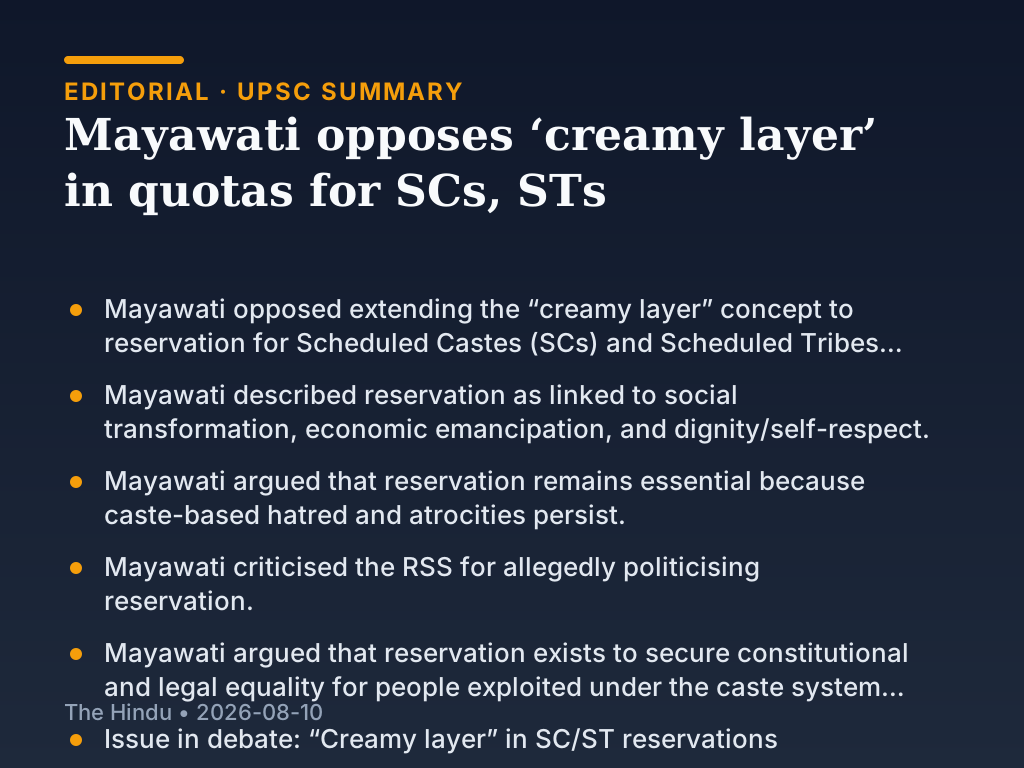
Bahujan Samaj Party (BSP) chief Mayawati opposed extending the “creamy layer” concept to reservation for Scheduled Castes (SCs) and Scheduled Tribes (STs). She said affirmative action through reservation is connected to social transformation, economic emancipation, and dignity/self-respect.
Mayawati argued that reservation remains essential for historically divided and oppressed communities because caste-based hatred and atrocities persist. She criticised the Rashtriya Swayamsevak Sangh (RSS) for allegedly politicising reservation and for backing a position that beneficiaries should voluntarily give up reservation benefits.
Background and earlier position (what ‘creamy layer’ means in the debate)
In Indian affirmative action policy debates, “creamy layer” usually means excluding relatively well-off individuals within a beneficiary group—often identified through socio-economic indicators—so that reservation benefits focus on those who are more disadvantaged.
Mayawati’s reasoning is that SC/ST reservation is not only a short-term economic support tool. She links reservation to constitutional and legal equality for people exploited under the caste system for centuries.
Related current affairs
- Bahujan Samaj Party leader Mayawati opposes ‘creamy layer’ concept in quotas for SCs, STs
- Legal case background: ‘creamy layer’ debate recap
- Quotafor SC/ST: Mayawati Bhimmark remark reflects RSS’s ‘casteist mindset’
- Legal: In opposing creamy layer for SC/STs, what govt argued
- Why has the Centre opposed creamy layer for SC/STs?
- Protesters gather at Jantar Mantar for overhaul of reservation system