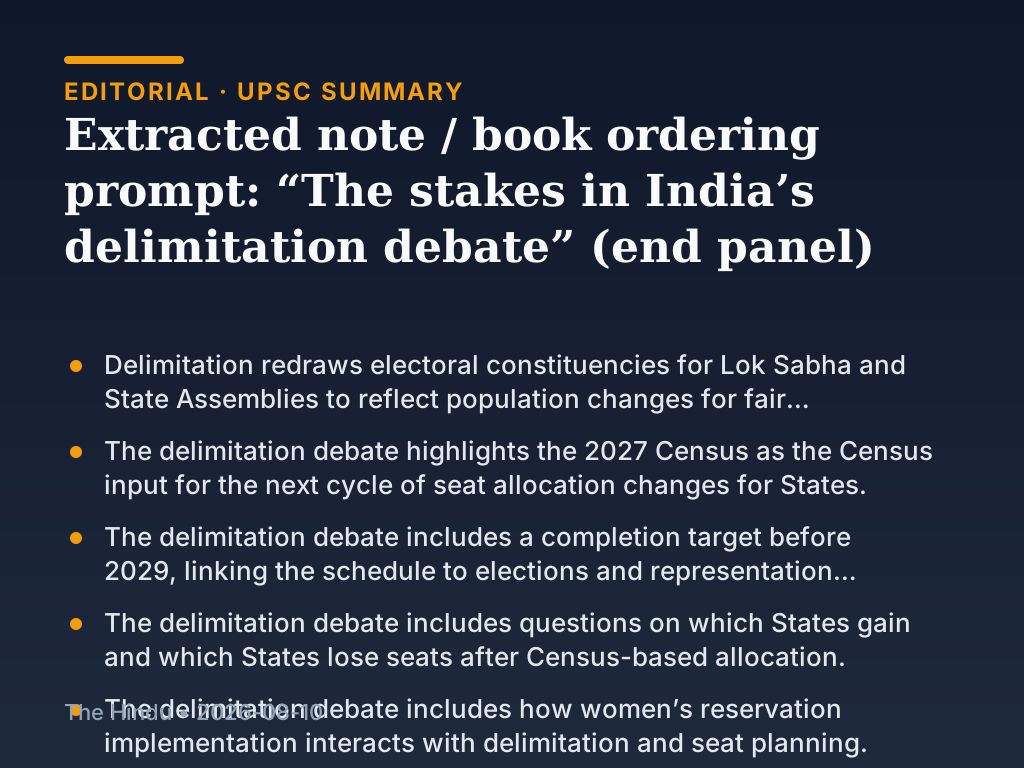
What the delimitation debate is about (as a UPSC-ready framing)
Delimitation redraws electoral constituencies for Lok Sabha and State Assemblies so that seat allocation and constituency boundaries track population changes. The political stakes come from representation changes (who gets more or fewer seats) and from electoral competition changes (which voters are grouped together under new boundaries).
What the book’s topic list signals to examine (reader-focused checklist)
What triggers delimitation — the legal and constitutional conditions that force redrawing of constituency boundaries.Effects of the 2027 Census on seat numbers — how Census results can change the number of seats for States.Whether delimitation can be completed before 2029 — the schedule constraint that matters for elections and representation.Which States gain and which States lose — the representation shift across States after Census-based seat adjustments.Women’s reservation implementation — how reservation for women in legislatures interacts with the delimitation exercise.How new boundaries affect electoral outcomes — the practical impact on party strategies and voter coalitions after redrawing.
Background and earlier position (what delimitation has historically meant in Indian Polity)
Delimitation is part of India’s constitutional design for representative democracy. The core idea is that every constituency should reflect population distribution as accurately as possible over time, so that one vote does not count more than another vote because of outdated boundaries. In practice, delimitation depends on Census data and is implemented through constitutionally provided institutional processes.