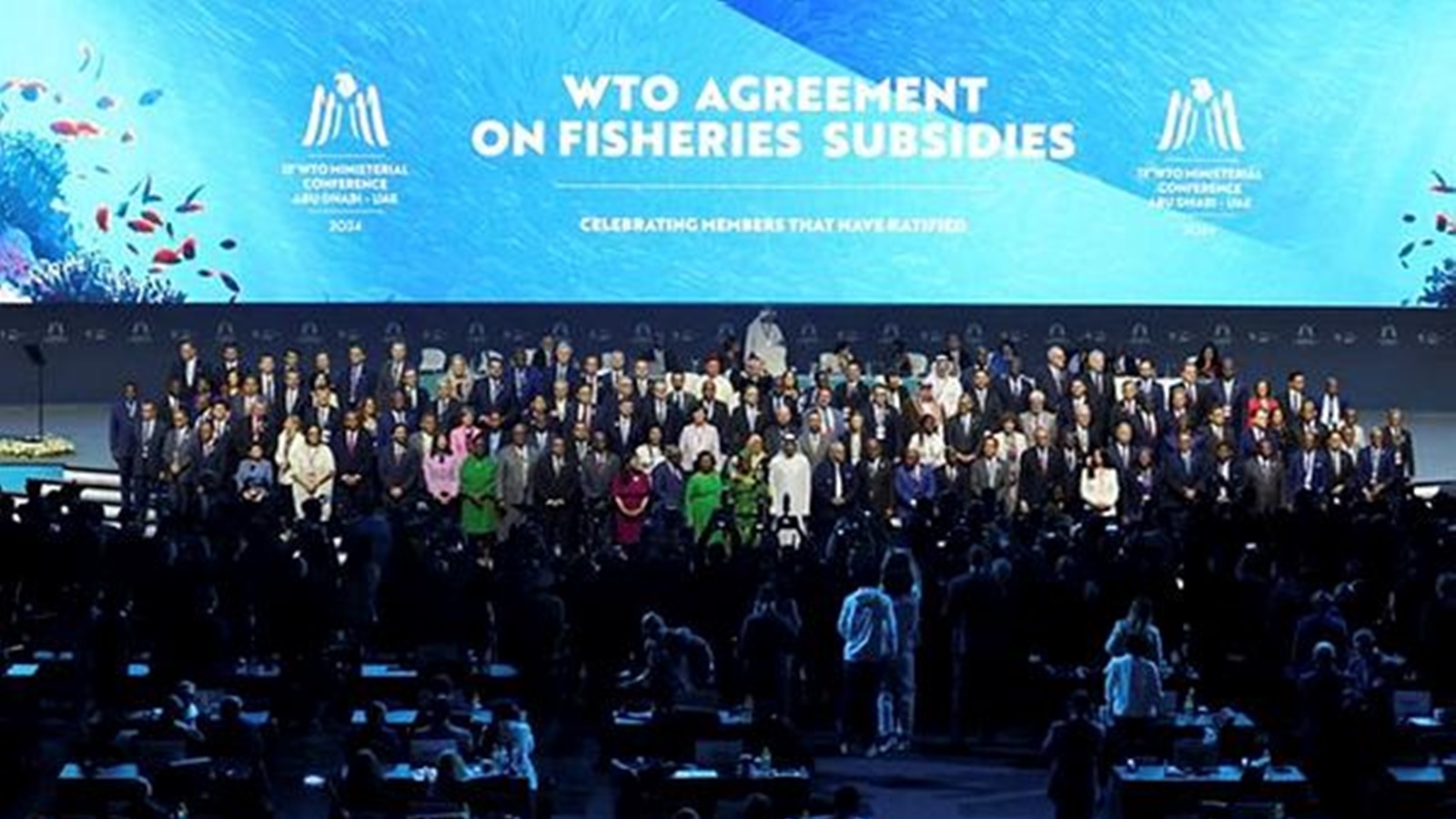
India has deposited its instrument of acceptance for the World Trade Organization agreement on fisheries subsidies. The acceptance brings the agreement closer to entering into force and adds India to the multilateral effort to curb harmful subsidies that support overfishing and illegal, unreported and unregulated fishing.
What happened
The WTO fisheries subsidies agreement is designed to restrict subsidies that contribute to depletion of fish stocks and to harmful fishing practices. India’s acceptance matters because entry into force depends on formal acceptance by the required number of WTO members.
Why the agreement matters
Fisheries subsidies are a classic trade-and-environment issue. They can support livelihoods, but they can also increase fishing capacity beyond sustainable limits. The agreement is part of the broader WTO effort to align trade rules with sustainable ocean governance.
Why India’s acceptance matters for UPSC
Related current affairs
- India becomes a Party to the WTO Agreement on Fisheries Subsidies
- India and key WTO members remain at loggerhead on plurilateral pacts
- India begins 8th WTO Trade Policy Review in Geneva; reaffirms commitment to rules-based multilateral trading system
- Finning: cruel, wasteful practice
- Vice President launches national programme for Letters of Authorisation for sustainable high-seas fisheries