What happened: Western Ghats ESA notifications remain delayed despite expert reviews
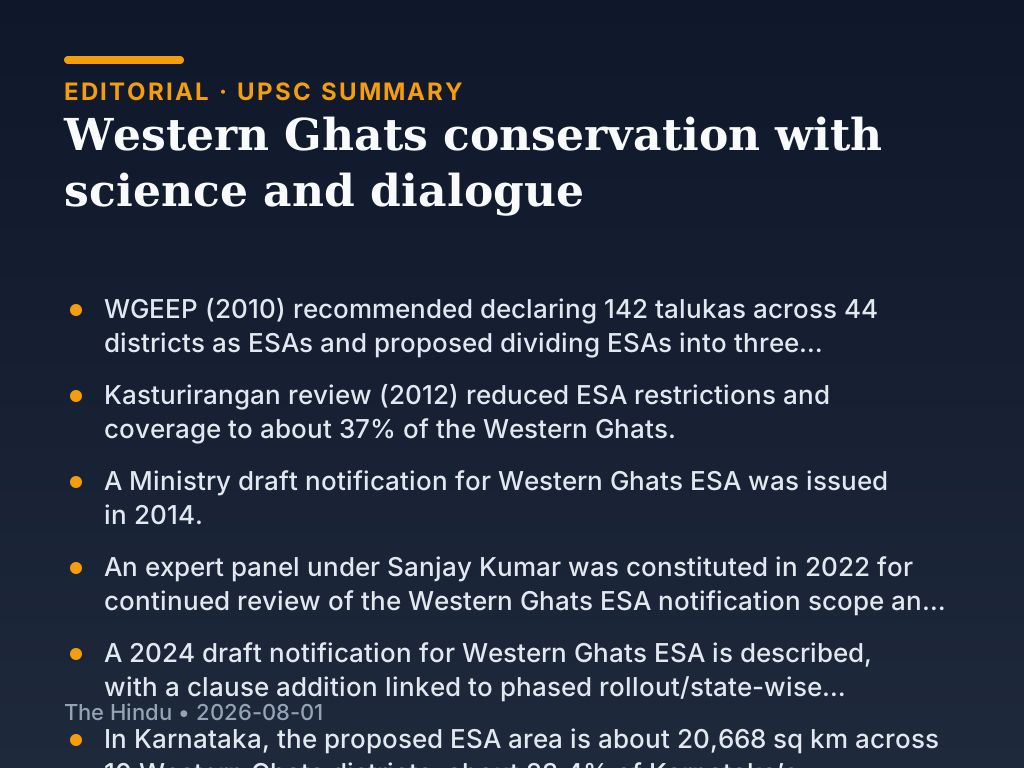
The centre’s Western Ghats ESA (Ecologically Sensitive Area) notification process has not reached finality. Draft notifications have been issued in multiple rounds, and expert-panel review has continued beyond earlier notification timelines into 2026, including a noted extension in July 2026 after a previous notification period expired.
Background and earlier positions: WGEEP (2010) vs Kasturirangan review (2012)
The Western Ghats lie across six coastal states and are biodiversity-rich landscapes. The Western Ghats include 39 biodiversity hotspots, and components such as national parks, reserved forests, and wildlife sanctuaries were designated as UNESCO World Heritage Sites in 2012.
The Western Ghats Ecology Expert Panel (WGEEP) was formed in 2010 (chaired by Madhav Gadgil). WGEEP recommended declaring 142 talukas across 44 districts as ESAs, and proposed dividing ESA areas into three ecologically sensitive zones to regulate human activity and provide legal protection under the Environment (Protection) Act, 1986.
After strong state-level opposition, the Government of India set up a review group under Krishnaswamy Kasturirangan in 2012. The Kasturirangan review reduced ESA restrictions and coverage to about 37% of the Ghats. ESA draft notifications were then issued multiple times, including an initial draft in 2014.
Related current affairs
- The Ecologically Sensitive Area debate highlights the need for balanced, inclusive conservation approaches (by Madhusudan Bandi)
- Western Ghats conservation: Centre reissues draft for eco-sensitive zone
- Western Ghats panel gets more years as deadlock continues over eco-sensitive area
- Reclaiming Assam’s elephant habitat, one weed at a time
- Public Notice: Complete Ban on sharp synthetic/nylon kite flying thread including popular “Chinese Manja” (NCT of Delhi, Department of Environment)
- Public Notice: Complete Ban on sharp synthetic/nylon kite flying thread including popularly known “Chinese Manja”