What happened
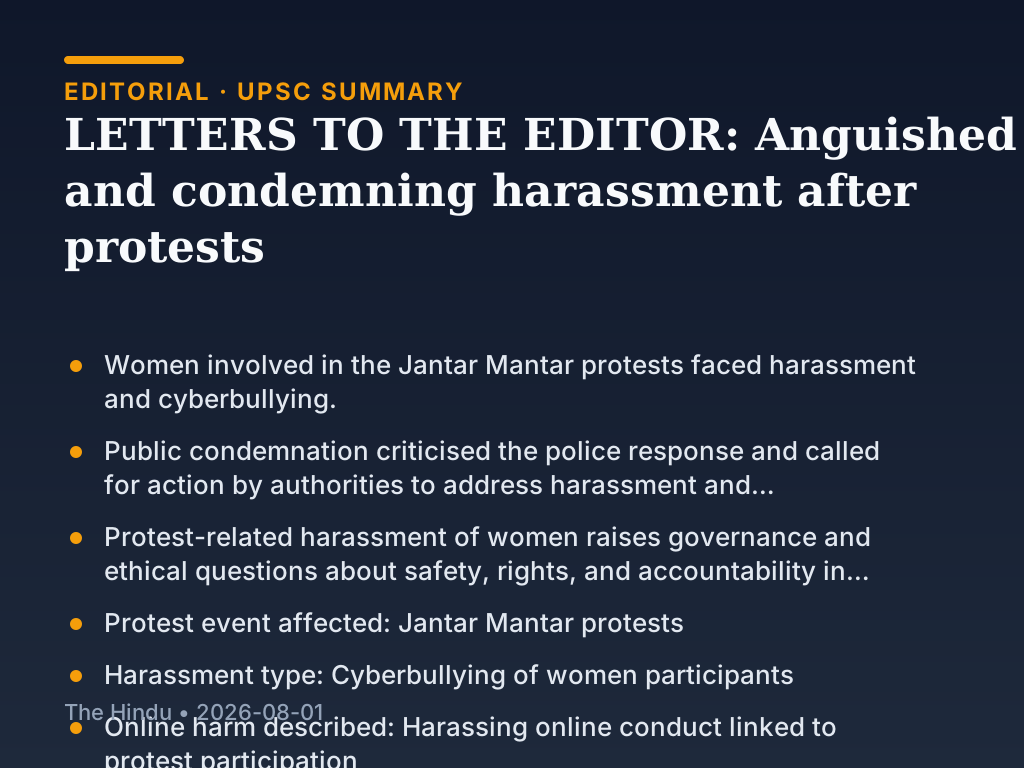
Women involved in the Jantar Mantar protests faced harassment and cyberbullying. Public condemnation highlighted dissatisfaction with the police response and called for effective action by authorities to address harassment and online abuse linked to protest participation.
Background and earlier position
Protests in India fall within democratic rights, so policing agencies have a duty to maintain public order while protecting participants’ safety. Harassment can take offline and online forms. Cyberbullying connected to real-world protest participation can increase fear, threaten dignity, and create barriers for women to participate safely in lawful public demonstrations.
What changed now
The immediate change in focus is the stronger linkage between protest participation and personal harm through online harassment. Public attention is now directed not only at physical law-and-order concerns at protest sites, but also at the accountability of police response and the need for authorities to act decisively when women face harassment connected to protests.
Related current affairs
- Letters: Additional responses on cyberbullying and police inaction (by Arathi Krishna S.S.; Unnikrishnan S. Menon; D. Sethuraman)
- Letters to the Editor: responses on harassment/doxxing and cyberbullying following student protests
- LETTERS TO THE EDITOR: Concerns about cyberbullying and police inaction
- LETTERS TO THE EDITOR: Stop the intimidation
- Letters to the Editor: Jantar Mantar protest (and related note)
- Promise of gender equality must be upheld