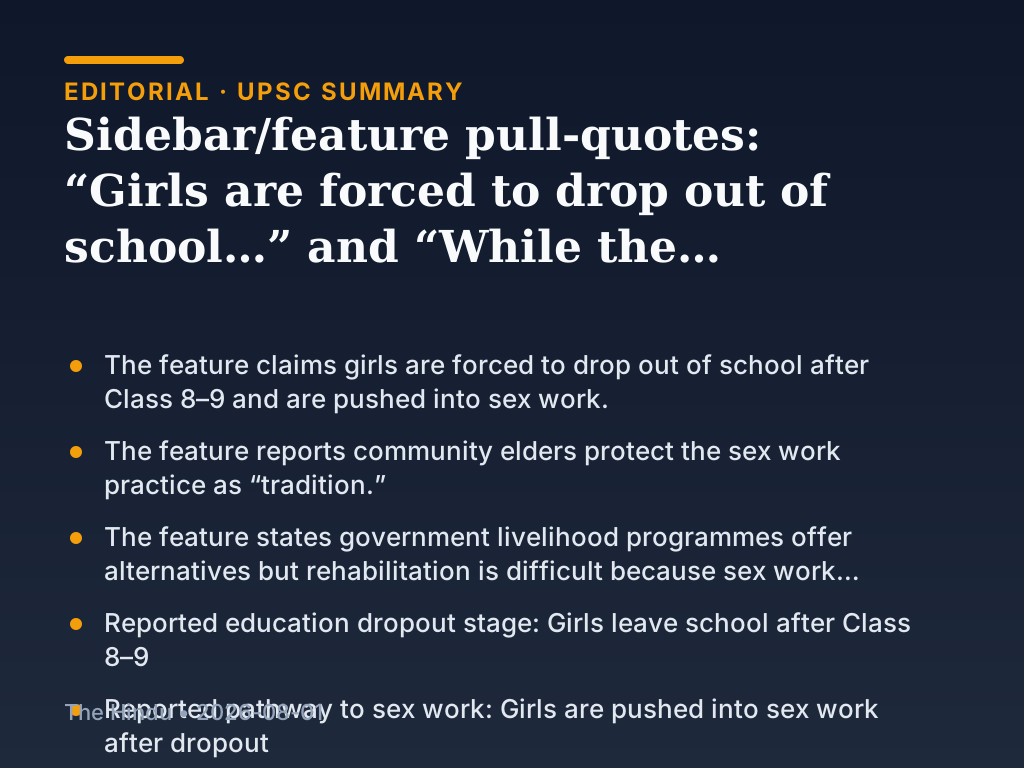
A reported pattern of school dropouts into exploitation is highlighted through two claims: girls are allegedly forced to leave school after Class 8–9 and are pushed into sex work, with community elders reportedly shielding the practice as “tradition.” The second claim is about policy delivery: government livelihood programmes exist for affected women, but rehabilitation can fail to close the income-and-lifestyle gap created by sex work. For UPSC, the core issue is not only what leads to exploitation, but whether rehabilitation models are strong enough to change incentives and social enforcement.
What happened (reported claims in the feature)
The feature provides two key claims describing a cycle of exploitation and rehabilitation limits:
School dropout after Class 8–9: girls are reportedly forced to drop out of school after completing Class 8–9.Push into sex work: after dropout, girls are reportedly pushed into sex work.Community protection as “tradition”: community elders are reportedly shown as protecting the practice as tradition.Rehabilitation income gap: government livelihood programmes offer alternatives, but it is reported to be difficult to match the income and lifestyle sex work provides, creating a gap in rehabilitation efforts.
Background and earlier position (how exploitation routes and rehabilitation usually intersect)
In studies and policy discussions on child protection and women’s welfare, exploitation is often sustained by two parallel constraints: Coercion through social norms: harmful practices can persist when influential community members shield them, reducing the likelihood that families or survivors seek help.Economic disincentives: even when support exists, survivors may not be able to sustain rehabilitation if alternative livelihoods cannot provide comparable or reliable earnings.
Related current affairs
- Photo captioned side graphics: key claims and quote excerpts from the main investigation
- CARA launches Adoption Awareness 2026 theme to promote legal adoption and prevent illegal adoption
- Government prioritises safety and security of children under POCSO framework and related measures
- Govt plans child labour survey plan, child labour pain? (fragmented)
- 46% city schools found deficient in ‘Child Safety Checklist’ audit
- Government strengthens online safety framework for children by tightening action against CSAM on social media