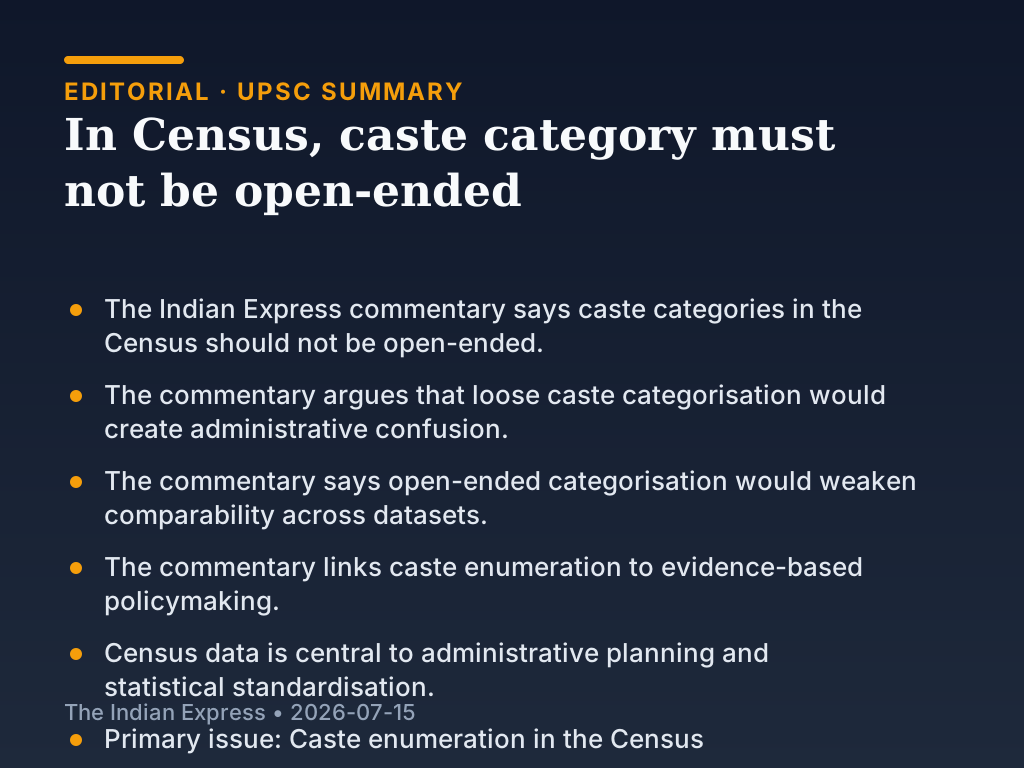
The Indian Express commentary argues that if caste is included in the Census, the enumeration must use clear, fixed categories rather than an open-ended design. The author’s core concern is administrative: a loosely designed caste column would make the data harder to classify, compare, and use for public policy.
The commentary links the issue to two recurring Census requirements: comparability across datasets and disciplined enumeration. It warns that open-ended caste entry could produce a large number of inconsistent subcategories, weaken statistical reliability, and complicate evidence-based policymaking.
The commentary also suggests that the caste question is politically sensitive and therefore needs design boundaries. Its implied policy position is that enumeration should support social analysis and welfare planning, but not become an endless exercise in expanding group labels.
The supporting box reinforces the same point through practical experience: open-ended caste categorisation is presented as difficult to classify, compare, and use effectively in official data systems.
Why the issue matters for UPSC
The caste-Census debate sits at the intersection of governance, social justice, and public policy design. It is relevant to questions on the Census, data quality, affirmative action, and the limits of administrative categorisation in a diverse society.
Related current affairs
- Census: Government explores how to count caste
- Caste count in Census
- Test run for 2nd phase of Census has ‘open column’ to record caste
- Protesters gather at Jantar Mantar for overhaul of reservation system
- Teachers on Census work deemed on school duty; cannot refuse assignment, says Calcutta HC
- The Dalit families’ reaction: ‘We still want to know who did it’ (Express special panel)