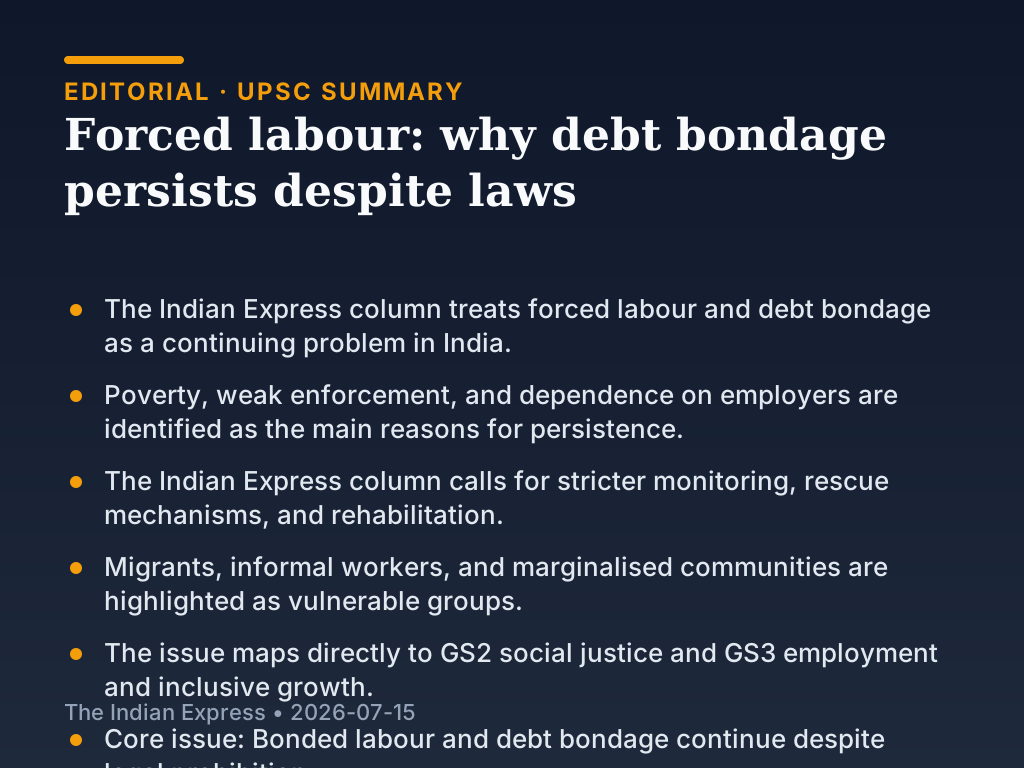
Why bonded labour persists despite legal bans and what policy response is still missing
GS2GS3The Indian ExpressGS2Bonded labourForced labourSocial justice
The Indian Express column argues that forced labour and debt bondage continue because poverty, weak enforcement, and dependence on employers still trap vulnerable workers in exploitative labour relations. The issue matters for UPSC because it combines social justice, labour rights, and governance failure.
Background and earlier position
Bonded labour is legally prohibited, but exploitative labour relations continue because structural conditions remain in place.
Bonded labour is not only a historical problem. It continues to affect migrants, informal workers, and marginalised communities. The Indian Express column calls for stricter monitoring, rescue mechanisms, rehabilitation, and policy attention to structural causes rather than only punishment of individual offenders.