What changed now
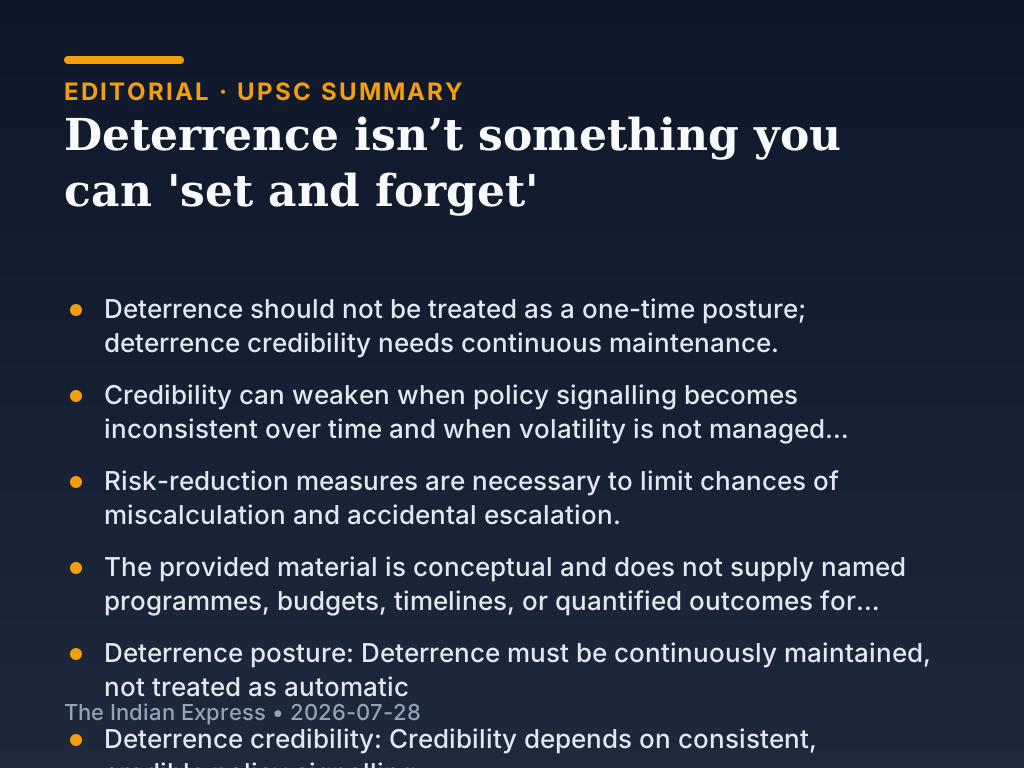
The main claim is that deterrence cannot be treated as a one-time setup. Deterrence credibility must be sustained continuously through credible policy signalling and risk-reduction measures, because complacency can increase the risk of unintended outcomes in a volatile security environment.
Background and earlier position
Deterrence is meant to discourage an adversary from taking harmful action by shaping expected costs and risks. In many security discussions, deterrence is treated like a posture: preparedness and signalling are set, and deterrence “continues” on its own if capabilities remain in place.
The provided claim challenges this posture-based simplification. Credibility can weaken when policy signalling becomes inconsistent or when decision-makers do not continuously manage volatility and escalation risk even if capabilities exist.
Why it matters for UPSC
Related current affairs
- Our strategic imagination must look beyond geography
- Cartoon/illustration caption: Deterrence in West Asia
- Deterrence in West Asia (cartoon)
- Centralised nature and international comparison: FCRA vis-à-vis global foreign influence transparency laws
- Trump: Will destroy bridge or power plant every time Iran fires at us
- Trump: We’ll destroy bridge or power plant every time Iran fires at a ship