What happened
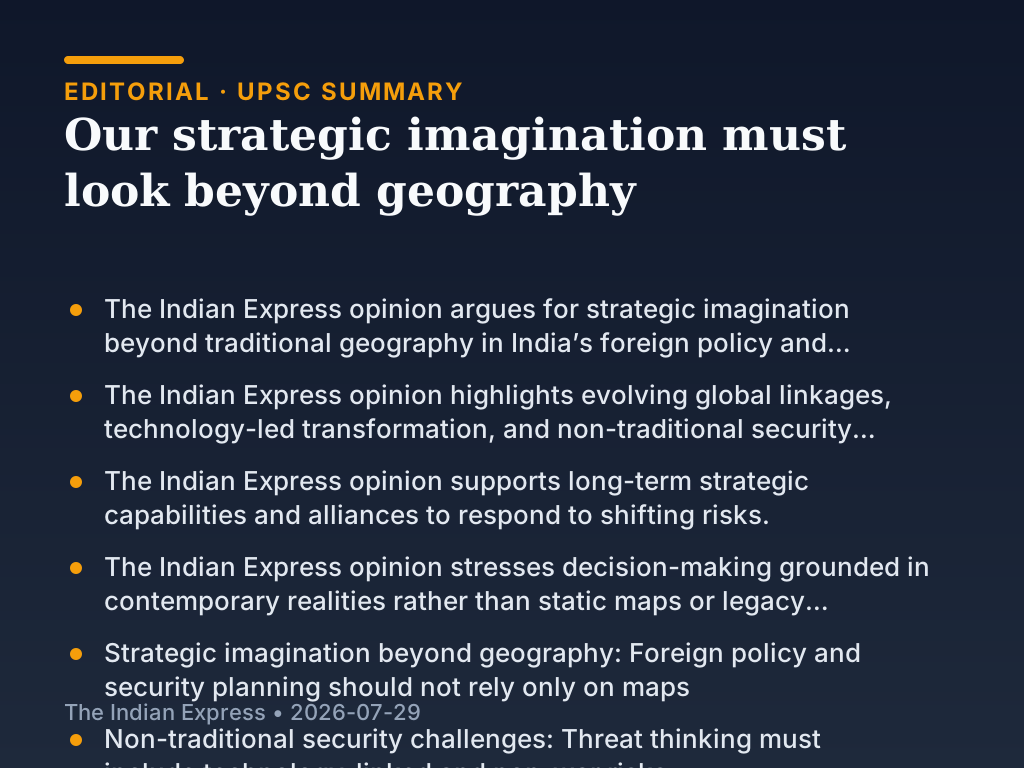
The Indian Express opinion calls for India’s foreign policy and security planning to look beyond traditional geography and fixed assumptions about the world. The opinion argues that India should design decisions around evolving global linkages, technology-led change, and non-traditional security challenges.
Background: why geography-based planning can be incomplete
Geography-based planning often treats distance, borders, and physical location as stable drivers of security risk. Modern risks, however, can be transmitted through global networks and technological systems, which can reduce the usefulness of geography-only threat models.
What changed in the argument
The Indian Express opinion urges India to update strategic planning inputs and planning logic by prioritising the following: evolving global linkages, technology-led transformation, and non-traditional security challenges. The opinion also recommends building long-term strategic capabilities and strengthening alliances to improve adaptation to changing risks. The opinion further stresses grounding decisions in contemporary realities rather than legacy assumptions tied to static maps.
Related current affairs
- Tougher sanctions
- Deterrence isn’t something you can 'set and forget'
- Bilateral talks with China
- Centralised nature and international comparison: FCRA vis-à-vis global foreign influence transparency laws
- Ed Miliband appointed Foreign Secretary; India-born Kanishka Narayan handles AI
- From 1991, three foreign policy lessons for managing disruption to continuities