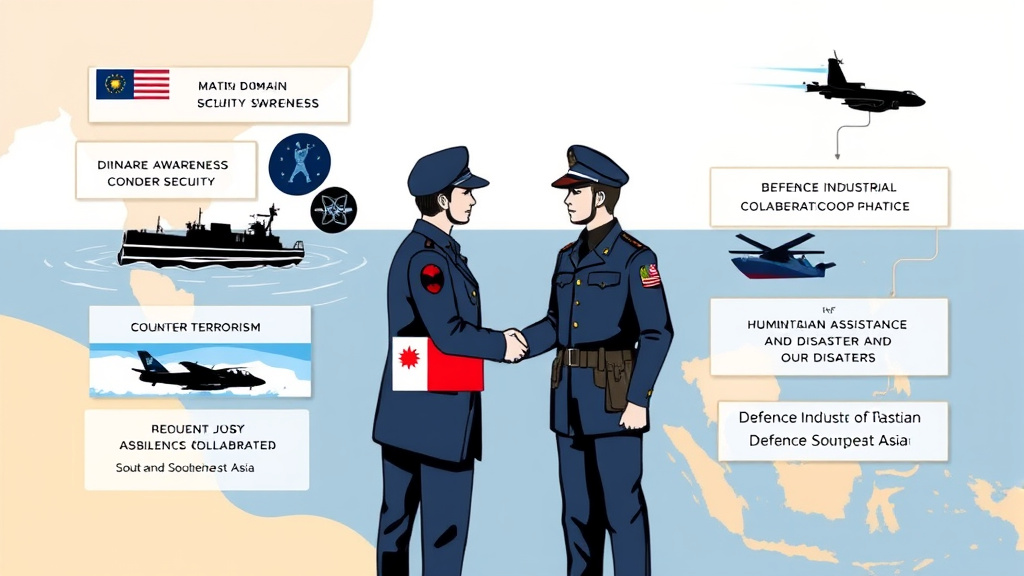
India has renewed its 2009 Joint Declaration on Security through a new Joint Declaration on Defence and Security Cooperation (JDDSC). The update matters because it broadens the cooperation agenda from a general security framework to a more detailed defence and technology partnership.
What the JDDSC covers
The declaration identifies the following areas of cooperation: interoperability of forces, capacity building, maritime domain, defence industrial collaboration, cyber security and technology, counter terrorism, HADR (humanitarian assistance and disaster relief), and a unified approach in UNCLOS, ASEAN, PIF (Pacific Islands Forum) and IORA (Indian Ocean Rim Association).
Background and continuity
The article does not provide the name of the partner country or the detailed provisions of the 2009 framework. What is clear is that the earlier security declaration existed as a baseline arrangement, and the new JDDSC renews it while expanding the scope to current defence, maritime and digital-security concerns.
This kind of update is important in Indian foreign policy because security cooperation now extends beyond traditional military issues. It includes maritime domain awareness, resilient supply chains in defence production, cyber security and technology exchange, and coordinated positions in regional institutions and conventions.
Related current affairs
- Much more than ‘Melbourne meets Modi’: India–Australia partnership expands in security, business, education and culture
- India-Australia Joint Declaration on Defence and Security Cooperation
- Home Minister directs police chiefs to detect and deport illegal migrants
- India-Japan Defence Ministers’ Meeting: Maritime Security Cooperation, Exercises and Tech Partnership
- Security agencies ‘dismantled’ ISIS-backed gang ahead of Independence Day
- Spreading terror with hate: The rise of a radical network via digital platforms