What the PIB backgrounder says
India’s textile and apparel sector is being positioned as a sector where sustainability can become a growth driver. The PIB backgrounder links organic fibre production, safer chemicals, circularity, waste recovery, eco-labelling, traceability, and carbon-market compliance with the future competitiveness of the textile industry.
Why the sector matters
The sector accounts for about 2% of India’s Gross Domestic Product (GDP), about 11% of manufacturing Gross Value Added (GVA), and about 4% of global textile and apparel exports. It is also a major employer, providing direct employment to more than 45 million people, and the note says many workers are women and rural workers.
Circular economy and textile waste
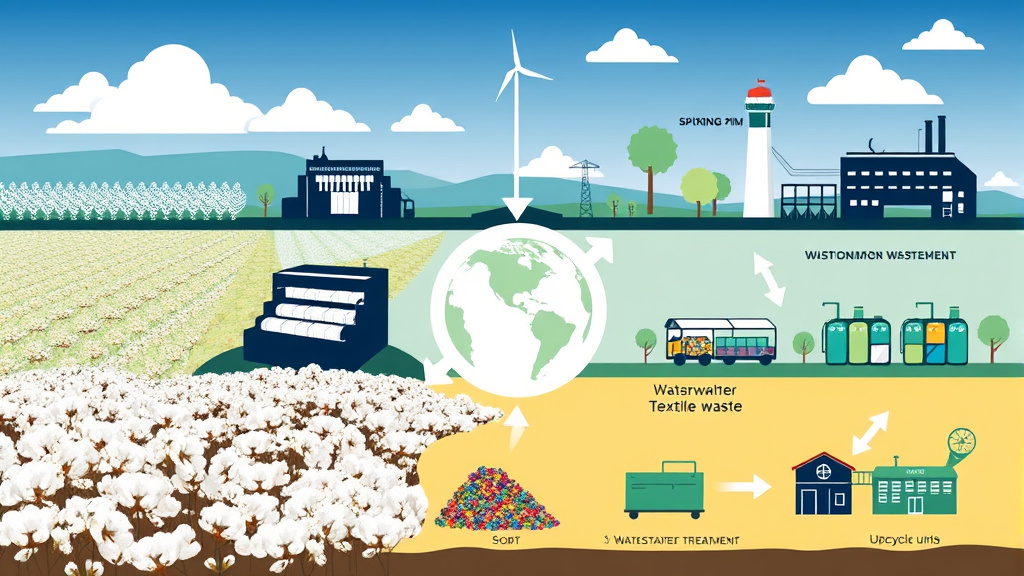
The PIB backgrounder says India manages about 7.8 million tonnes of textile waste annually, with over 90% coming from domestic pre-consumer and post-consumer waste. More than 70% of total textile waste is reportedly recovered for recycling, upcycling, downcycling, or reuse, while nearly 95% of pre-consumer waste is collected and reused through established value chains.
Related current affairs
- Bharat Tex 2026: high global participation and textile investment commitments
- Ministry of Textiles to Organise ‘Weave The Future 4.0 – Upcycling Edition’ at Dilli Haat
- PM shares article by Union Minister Bhupender Yadav on India’s BRICS chairship and sustainable development
- India calls for people-centric, implementation-oriented environmental action at 12th BRICS Environment Ministers’ Meeting
- Piyush Goyal calls for fair trading practices, circular economy and globalisation of ‘Make in India’ at Bharatiya Vyapar Mahotsav
- Scientific mine closure as circular economy transition: AAROH annual report released