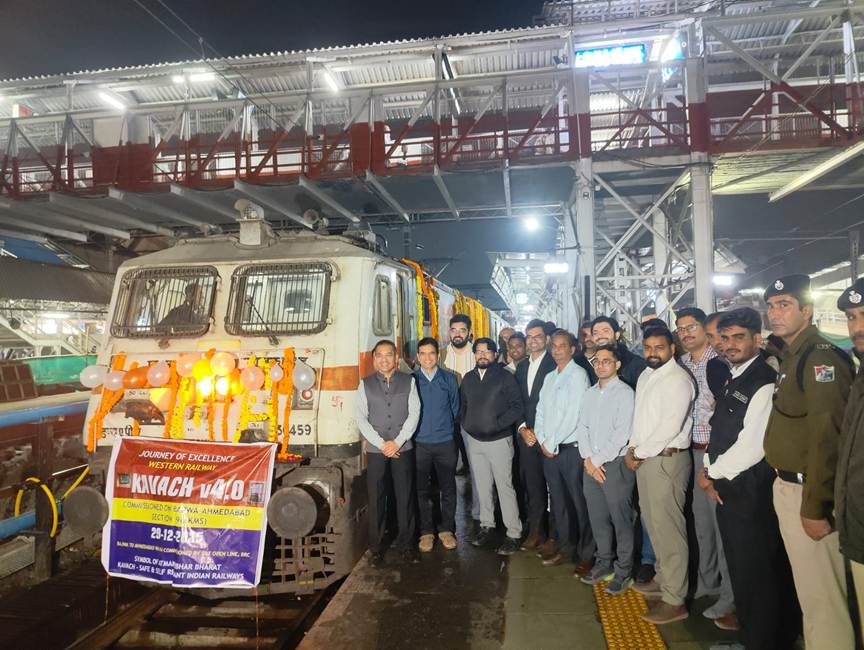
Indian Railways has reported a steep decline in consequential train accidents and has linked the improvement to sustained safety expenditure, signalling upgrades, track modernisation, and rolling-stock improvements. The same reply also gives the latest status of Kavach, the indigenous Automatic Train Protection system, which is being expanded on major trunk routes.
What happened now
According to the Ministry of Railways, consequential train accidents have fallen sharply over time. The reply also says that the Consequential Accident Index has improved, indicating fewer accidents relative to train-kilometres operated. The railway ministry attributes the improvement to measures covering signalling, track, bridges, coaches, wagon maintenance, staff training, and fog safety.
Background and earlier position
Railway accidents in India traditionally arise from track defects, locomotive or coach defects, equipment failures, and human error. The Ministry of Railways says that the safety focus has been strengthened through interlocking systems, track circuiting, replacement of older coach designs, elimination of unmanned level crossings on broad gauge routes, and better inspection and maintenance systems.
Key facts for Prelims
Related current affairs
- Kavach Automatic Train Protection: indigenously developed ATP system expanded; Version 4.0 commissioned on 2,633 route km as of 31.07.2026
- Strengthening railway signalling in Jammu & Kashmir and across India; deployment of electronic interlocking, track circuiting, axle counters and Kavach (ATP)
- Indian Railways approves Kavach Version 4.0 rollout on 660 km in Izzatnagar Division (estimated ₹295 crore)
- Indian Railways approves ₹170 crore for Kavach 4.0 on remaining 712 Rkm of Moradabad Division
- Indian Railways approves ₹206 crore deployment of Kavach Version 4.0 on 680 route km in Northern Railway
- Indian Railways sanctions ₹125 crore Bhavnagar Para Yard Remodeling project in Gujarat