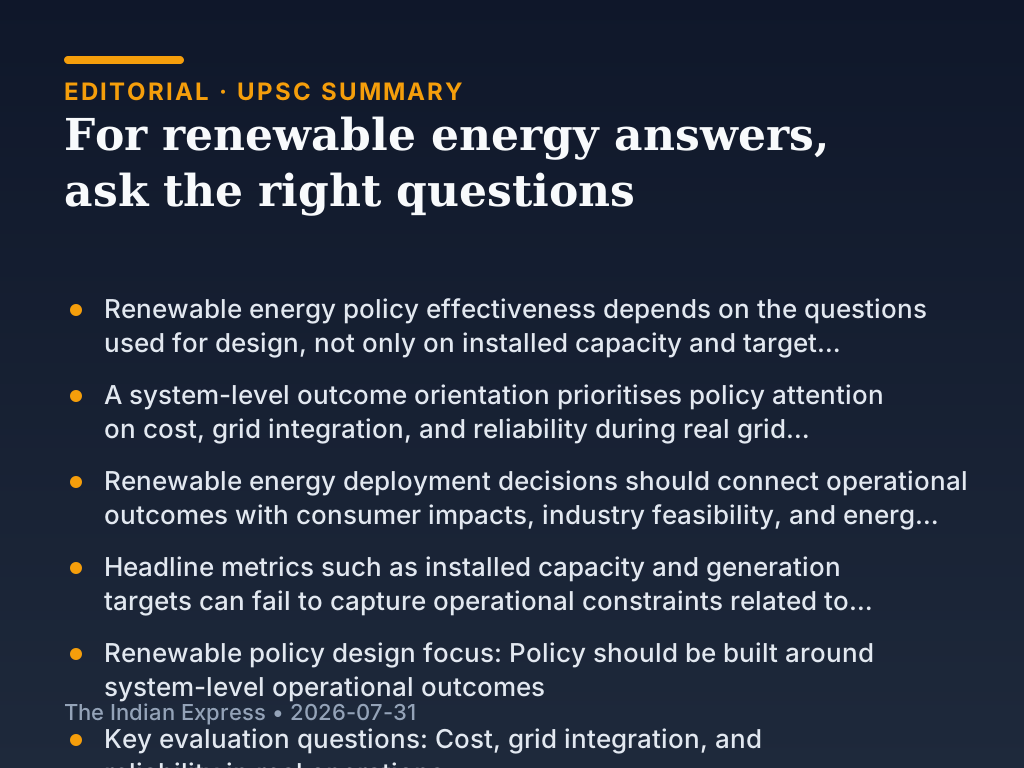
What happened: renewable energy policy design is urged to ask better questions
Renewable energy policymakers are encouraged to avoid designing policy mainly around headline targets and installed-capacity figures. The advocated design logic is to ask practical system-level questions that determine whether variable renewable power can be absorbed by the grid without creating reliability risks. The approach also links renewable deployment decisions with consumer impacts, industry feasibility, and energy security.
Background and earlier position: isolated capacity or target metrics can miss grid realities
Renewable energy policies often use measurable indicators such as installed capacity and generation targets to track progress. These indicators help monitoring, but they may not show whether the electricity grid can reliably integrate renewable generation. Headline metrics can also miss integration and balancing costs that appear during real grid operation across seasons and daily demand patterns.
What changed now: system-level outcomes are prioritised in policy design
The recommended shift is from isolated metrics to system-level outcome orientation. Renewable energy policy design should be aligned with operational outcomes during power-system operation, especially cost, grid integration capability, and reliability. Deployment should be evaluated in terms of performance in real deployment conditions, including consumer affordability and industry feasibility.
Related current affairs
- Sowing the seeds of a solar power intervention: India’s emerging agrivoltaics model
- DPIIT signs MoUs with PhonePe and Shell India to strengthen startup ecosystem and drive innovation
- India achieves 300 GW RE capacity, 400 GW target by 2030
- India achieves 300 GW RE capacity, 60% of energy from renewables (claim/summary)
- No renewable energy project within 1 km of border: govt.
- Wind turbine firms seek export-linked sops, PLI support