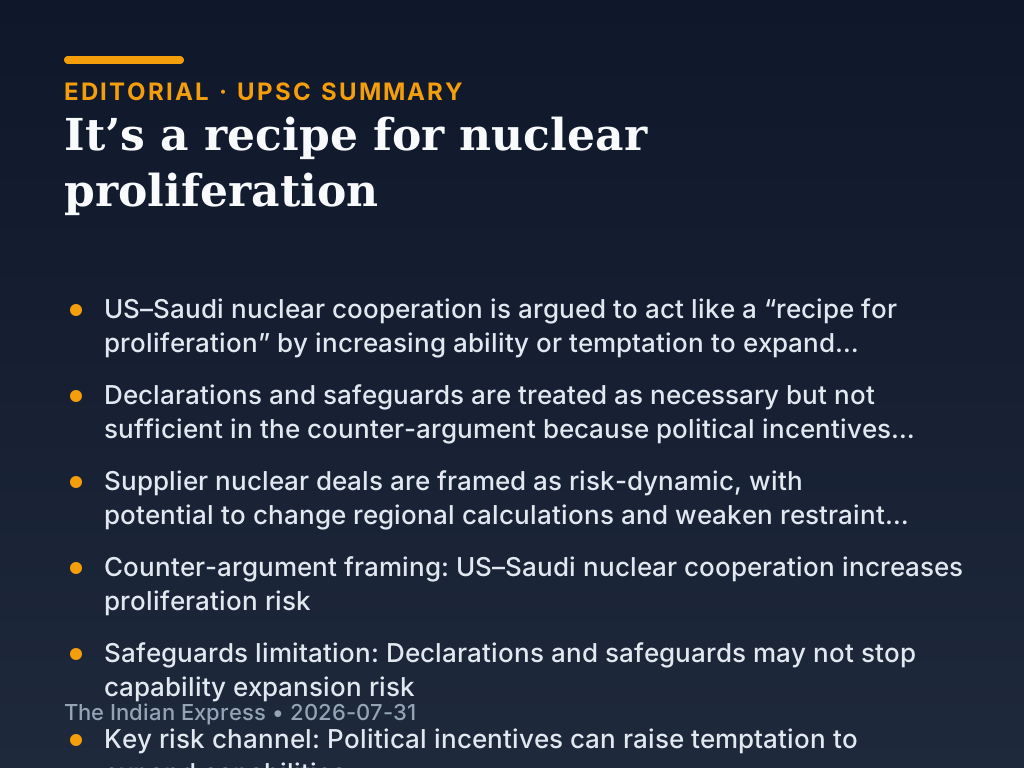
A proliferation-risk counter-argument treats US–Saudi nuclear cooperation as a potentially dangerous pathway. The argument focuses on how supplier arrangements can shift incentives and provide technical know-how, increasing capability ambitions or temptation, even alongside declarations and safeguards.
What happened (core claim)
The counter-argument presents US–Saudi nuclear cooperation as potentially acting like a “recipe for proliferation.” The argument stresses risk dynamics rather than relying only on verification tools.
Background and earlier position
Non-proliferation governance commonly uses declarations (statements of intent and obligations) and safeguards (verification mechanisms) to manage diversion and misuse risk. The counter-argument accepts these elements but warns that incentives and know-how can still steer behaviour toward expanded capabilities.
What changed now (risk dynamics highlighted)
Related current affairs
- A Saudi reactor is not a Saudi reactor
- The debate graphic/question box: Does the US-Saudi nuclear deal increase the risk of arms race in West Asia?
- A Saudi reactor is not a Saudi nuclear deal increase the risk of an arms race in West Asia?
- U.S. to announce nuclear agreement with Saudi Arabia
- Sailor killed in drone strike laid to rest in Keralam
- Does the US-Saudi nuclear deal increase the risk of an arms race in West Asia?