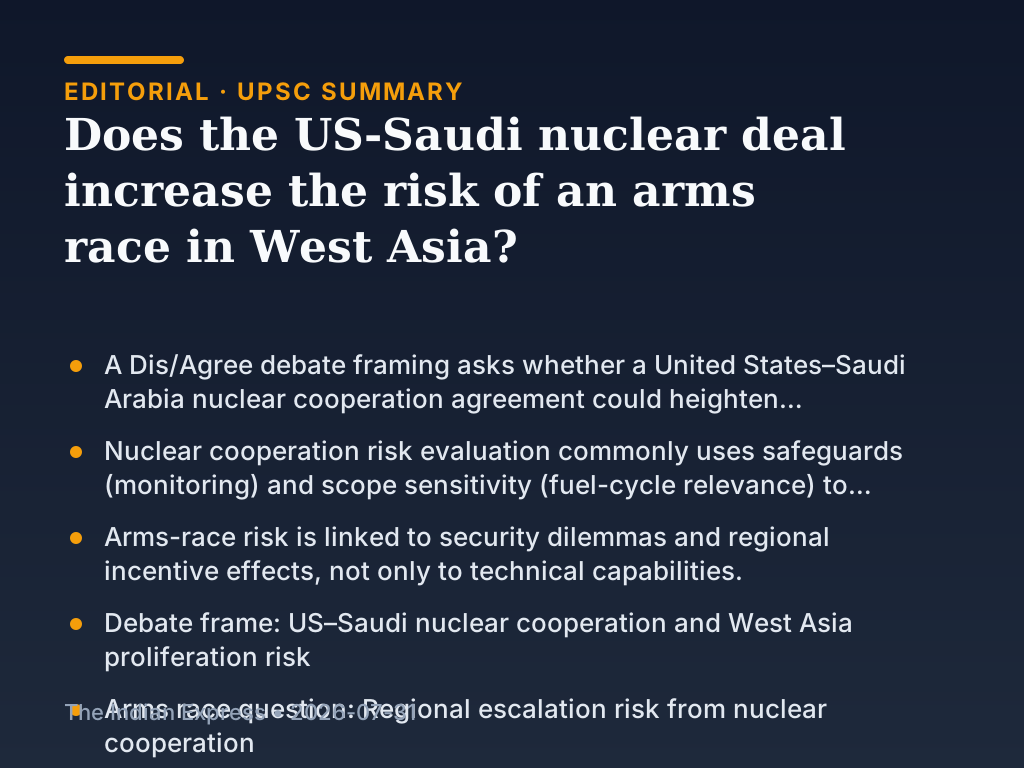
What happened (debate framing)
A Dis/Agree debate column frames a policy question on whether a United States–Saudi Arabia nuclear cooperation agreement could heighten proliferation risks in West Asia and trigger an arms-race dynamic across the region. The framing is designed to prompt readers to weigh stability and non-proliferation implications using competing arguments rather than to present a single definitive policy verdict.
Background and earlier position (how nuclear cooperation is assessed)
Nuclear cooperation between states is usually evaluated using two connected lenses. First, safeguards and verification arrangements (monitoring and compliance checks that reduce diversion to weapons) matter for proliferation risk. Second, the sensitivity of cooperation matters—cooperation that is relevant to the nuclear fuel cycle can be treated as higher risk than strictly civilian, non-sensitive cooperation.
What changed now (why the debate question matters)
The key shift in the debate framing is the emphasis on regional proliferation risk and arms-race concerns rather than a narrow technical view of assistance. The dispute is about how a United States–Saudi Arabia nuclear cooperation agreement could alter perceptions and incentives among West Asian states—whether states see the arrangement as credible risk reduction or as a pathway to capability-related uncertainty.
Related current affairs
- The debate graphic/question box: Does the US-Saudi nuclear deal increase the risk of arms race in West Asia?
- A Saudi reactor is not a Saudi reactor
- A Saudi reactor is not a Saudi nuclear deal increase the risk of an arms race in West Asia?
- It’s a recipe for nuclear proliferation
- All art, no deal: Donald Trump miscalculated timing and substance of Saudi nuclear deal
- What is the Saudi-U.S. nuclear deal about? Why does Saudi Arabia want a nuclear programme? Why has President Trump linked the deal to the Abraham Accords? How does the agreement impact Iran’s nuclear programme?