What happened: US–Saudi civil nuclear cooperation during heightened U.S.–Iran conflict
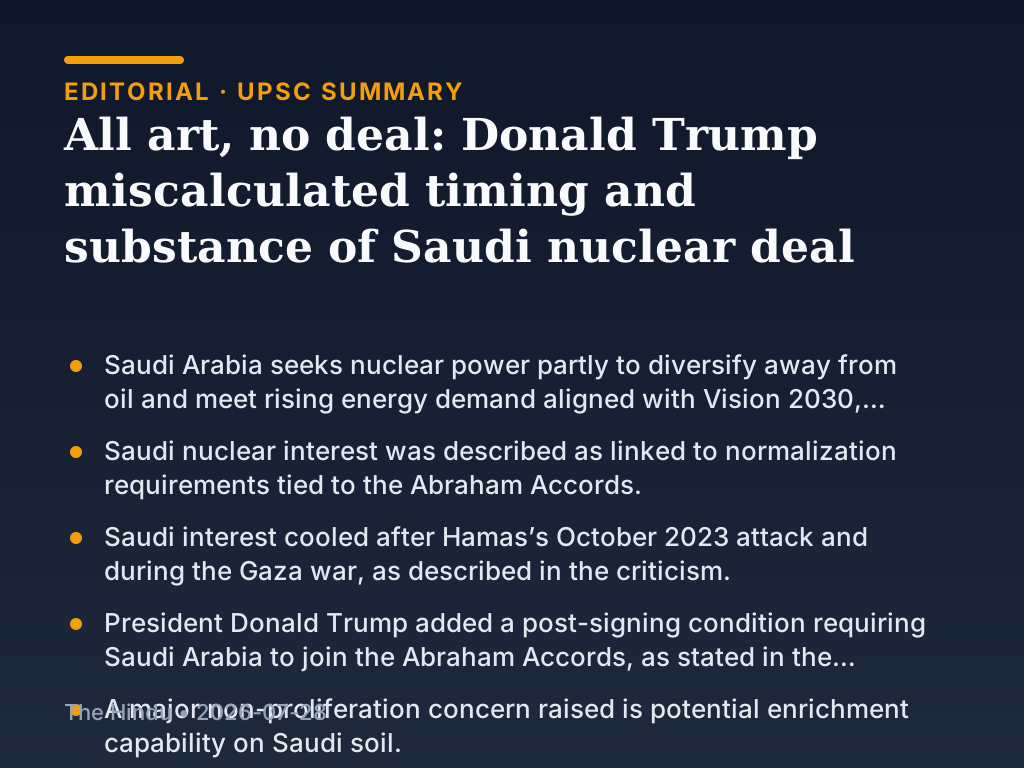
The United States and Saudi Arabia announced a civil nuclear cooperation arrangement during a period of heightened U.S.–Iran conflict. The key criticism is that the timing and evolving conditions surrounding the arrangement could worsen regional mistrust rather than reduce it.
The criticism also centres on safeguards-sensitive features connected to nuclear enrichment potential and inspection expectations. Even when an arrangement is framed as civil in purpose, enrichment-relevant choices affect how other regional actors judge the possibility of future weapon-linked capability.
Background and earlier position: Saudi nuclear goals and earlier normalization-linked requirements
Saudi Arabia aims to use nuclear power for energy supply and diversification away from oil, and for meeting rising energy demand. Saudi energy planning is linked to Vision 2030 goals, including the aim to preserve oil and gas for export.
Saudi nuclear ambitions were previously described as depending on normalization requirements tied to the Abraham Accords. After Hamas’s October 2023 attack and during the Gaza war, Saudi interest in that normalization-linked approach cooled.
Related current affairs
- What is the Saudi-U.S. nuclear deal about? Why does Saudi Arabia want a nuclear programme? Why has President Trump linked the deal to the Abraham Accords? How does the agreement impact Iran’s nuclear programme?
- U.S. announces civilian nuclear agreement with Saudi Arabia
- U.S. to announce nuclear agreement with Saudi Arabia
- Does the US-Saudi nuclear deal increase the risk of an arms race in West Asia?
- A Saudi reactor is not a Saudi nuclear deal increase the risk of an arms race in West Asia?
- It’s a recipe for nuclear proliferation