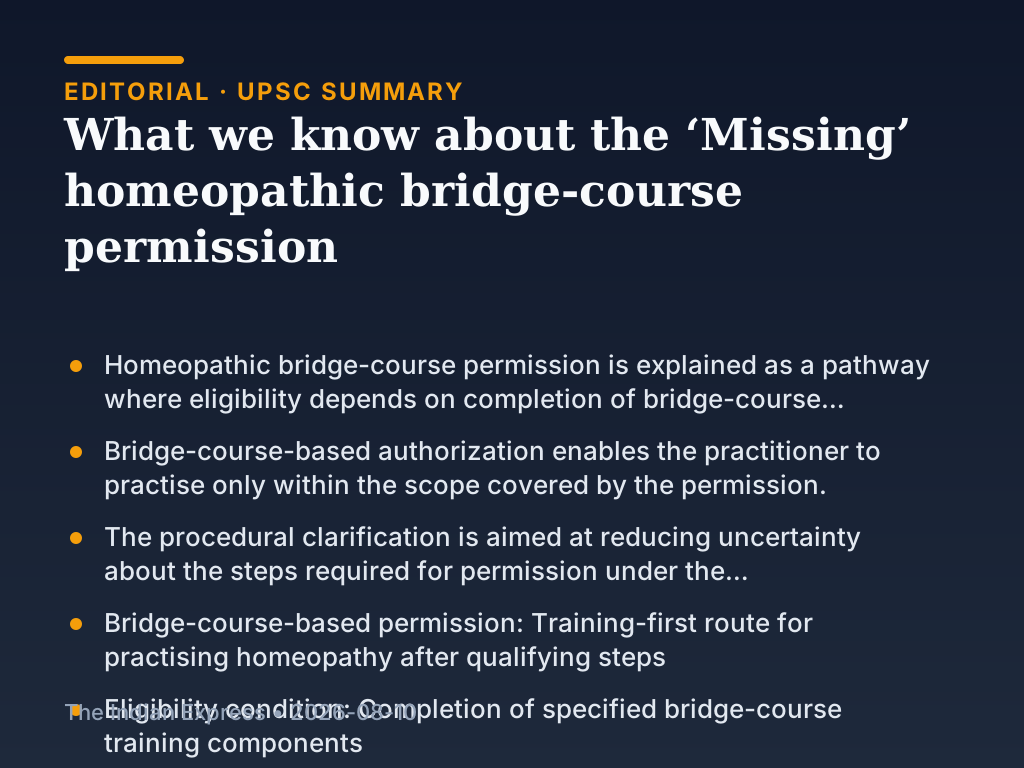
What happened (procedural clarification on bridge-course-based permission for homeopathic doctors)
A procedural clarification outlines the permission pathway linked to homeopathic bridge-course training. The clarification focuses on three practical questions for candidates: who can benefit from the bridge-course-based permission route, what training completion is required, and what the authorization allows homeopathic doctors to do in practice.
Who can benefit and what the authorization enables
The bridge-course-based permission route is presented as an eligibility path for homeopathic doctors who have completed the required bridge-course training. After completing the mandated training milestones and securing the relevant AYUSH-related authorization, the permission enables the practitioner to take up the role that the permission scope covers, instead of granting broad, unconditional practice rights by default.
Training requirement: completion-based eligibility
The clarification makes completion of bridge-course training central to eligibility. A candidate must finish the specified training components as part of the bridge-course route before the permission can operate. In governance terms, the permission is tied to training completion rather than only academic background or intent to practise.
Related current affairs
- Maharashtra allows homeopathic doctors to give alternative medicine orders after a bridge course
- PCIM&H and IPC renew MoU for “One Herb, One Standard” to harmonise quality standards for traditional medicines
- AYUSH Parliamentary Consultative Committee focuses on Yoga and Naturopathy for preventive healthcare
- Maharashtra allows homeopathy doctors to give affordable medicine after bridge course; critics question the policy
- Maharashtra allows homeopathic doctors to give additional medicines to patients
- India adopts strategy to promote AYUSH-based medical & wellness tourism; AYUSH visa introduced; Medical Value Travel summits held