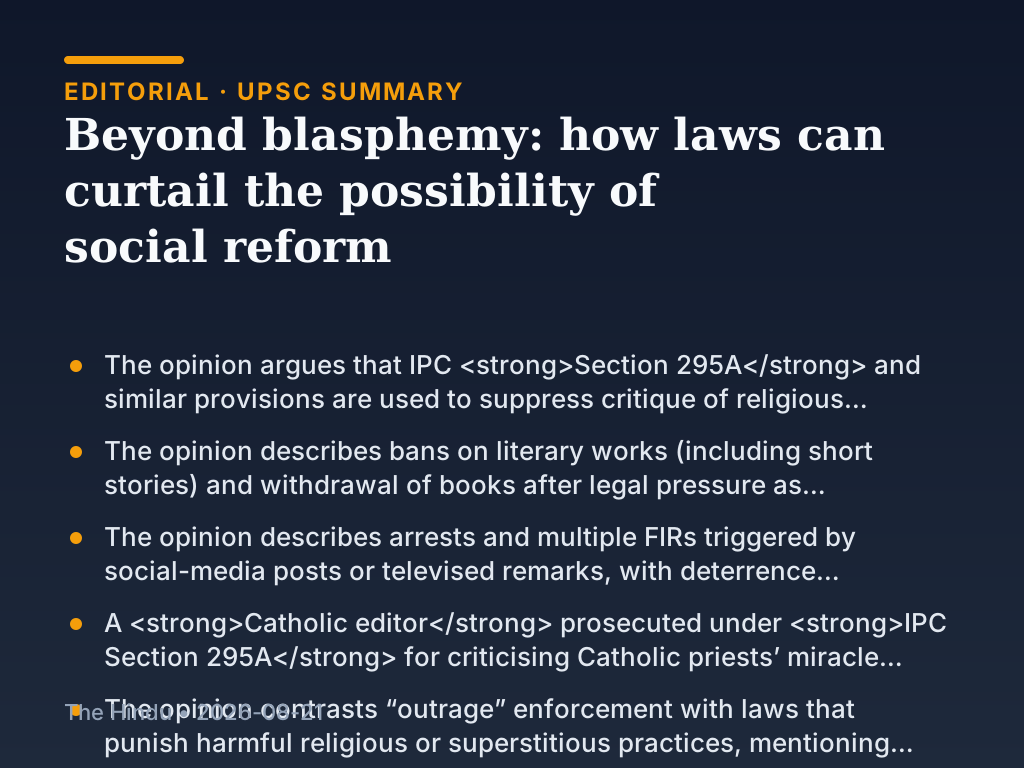
What happened: legal action that discourages criticism of religion
A The Hindu opinion argues that IPC Section 295A (and similar religious-sentiment related provisions) are repeatedly invoked to suppress critique of religious practice. The opinion describes a pattern where writers, artists, publishers, and speakers face bans, book withdrawals after legal pressure, harassment, arrests, and multiple FIRs. The opinion emphasises that deterrence can occur well before any final court verdict.
How the opinion says the “religious outrage” mechanism works
The opinion argues that the enforcement pattern is not a steady doctrinal protection of religious sentiment. Instead, it claims enforcement decisions are often case-by-case political calculations about which religious communities or practices are treated as currently “powerful” or “unpopular”. The opinion’s policy implication is that criminal law becomes a lever that shapes public debate and reform.
Background: a second legal direction punishes harmful religious or superstitious practices
The opinion contrasts the “outrage” logic with a different legal logic in India: statutes that empower the state to punish certain religious or superstitious practices because they are treated as harmful. The opinion mentions laws relating to human sacrifice/“black magic” in some states and it also mentions anti-sati measures as part of this different direction.