What happened: TOTR targets conflict and safety issues outside protected tiger reserves
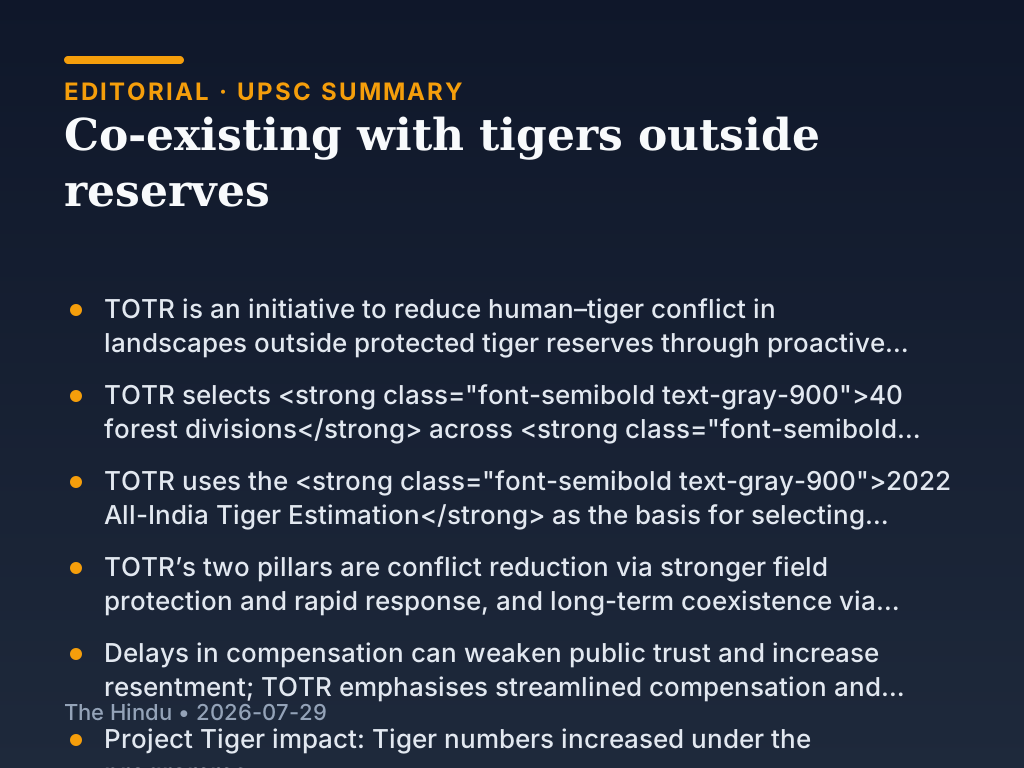
India’s Ministry of Environment, Forest and Climate Change is starting the “Tigers Outside Tiger Reserves” (TOTR) initiative to reduce human–tiger conflict in landscapes where tigers range beyond protected tiger reserves. The initiative is designed for proactive governance rather than only reacting after incidents occur. Forest departments in multiple regions report escalation of conflict-type incidents in tiger-fringe landscapes. Reported incident types include human fatalities, livestock depredation, accidents, and prolonged rescue operations, along with rising public anxiety.
Background and earlier position: Project Tiger’s protected-area focus and rising dispersal
Project Tiger is associated with protected tiger reserves and reserve-centric conservation. Protected areas expanded after Project Tiger’s launch, and tiger numbers increased. A key conservation challenge now is the movement and persistence of a growing share of tigers outside protected tiger reserves. When tigers occupy forest fringes and other lands used by people, repeated human–tiger contact becomes more likely, increasing conflict and safety risks.
What changed now: TOTR starts with a pilot in 40 forest divisions across 9 states
The Ministry of Environment, Forest and Climate Change plans TOTR as a targeted pilot phase. The first phase selects 40 forest divisions across 9 states for TOTR implementation. The selection uses the 2022 All-India Tiger Estimation. TOTR is built on two pillars:
Related current affairs
- Tamil Nadu’s encroachment problem
- 12th BRICS Environment Ministers’ Meeting: MoEFCC unveils four BRICS knowledge compendiums
- BRICS Environment Working Group Senior Officers Meeting discusses climate and sustainable development priorities in New Delhi
- The road ahead for the Asiatic lion
- Parliamentary Consultative Committee meeting on Human–Wildlife Conflict chaired by Union Environment Minister
- Model Rules on felling of trees in agricultural land to promote agroforestry