What happened: reserved forest diversion for limestone mining and potential disruption of Asiatic lion corridors
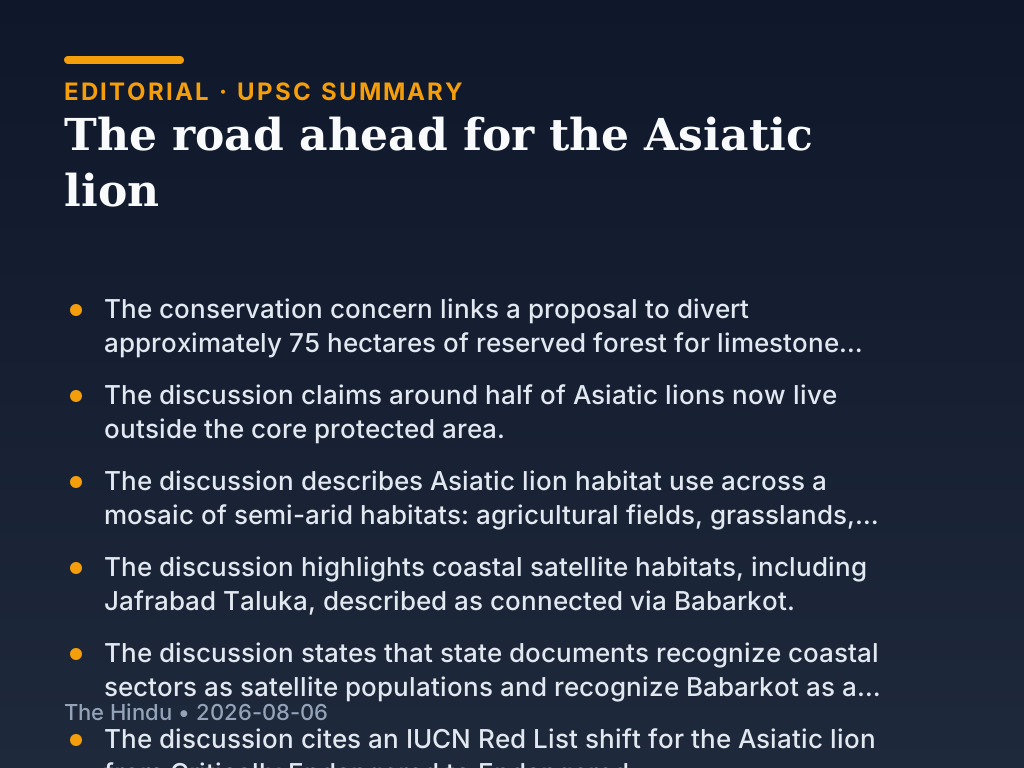
A proposal is being discussed to divert approximately 75 hectares of reserved forest for limestone mining in Gujarat. The conservation concern is that habitat alteration around reserved forest areas can disrupt the movement corridors that Asiatic lions use across connected habitats. The argument focuses on whether mining-driven disruption could isolate coastal satellite lions from a broader forest-linked lion population through known movement routes.
Background and earlier position: Asiatic lion recovery depends on landscape-level connectivity, not only Gir
The conservation premise is that Asiatic lion recovery needs landscape-level conservation — protection of connected habitats and functional movement corridors across the wider semi-arid landscape, not only strict protection of a core protected area. Key elements of lion habitat use described include a dispersal mosaic across: agricultural fieldsgrasslandsrugged hillsforestscoastal tracts A key quantitative claim is that around half of Asiatic lions now live outside the core protected area. The conservation discussion also highlights coastal satellite habitats, including Jafrabad Taluka, described as connected via Babarkot. State documents are said to recognize these coastal sectors as satellite populations and to recognize Babarkot as a corridor for Asiatic lion movement.
What changed now: mining risk in reserved forest affecting corridors and habitat mosaics
The change now is a land-use decision affecting reserved forest: diverting reserved forest area for limestone mining. The risk chain presented is habitat-quality disruption and possible fragmentation of corridor function. The conservation concern includes: isolation of coastal satellite lions from the larger connected lion populationpossible lion displacement into human-dominated areasincreased risk of human–lion conflictpotential large-scale tree felling associated with the mining-linked land disturbance
Related current affairs
- Asiatic Lion population increases from 523 (2015) to 891 (2025); Minister cites conservation efforts
- Parliamentary Consultative Committee meeting on Human–Wildlife Conflict chaired by Union Environment Minister
- Co-existing with tigers outside reserves
- MoEFCC inaugurates Centre of Excellence on Human–Wildlife Conflict at WII-SACON; launches National Human–Wildlife Conflict Portal