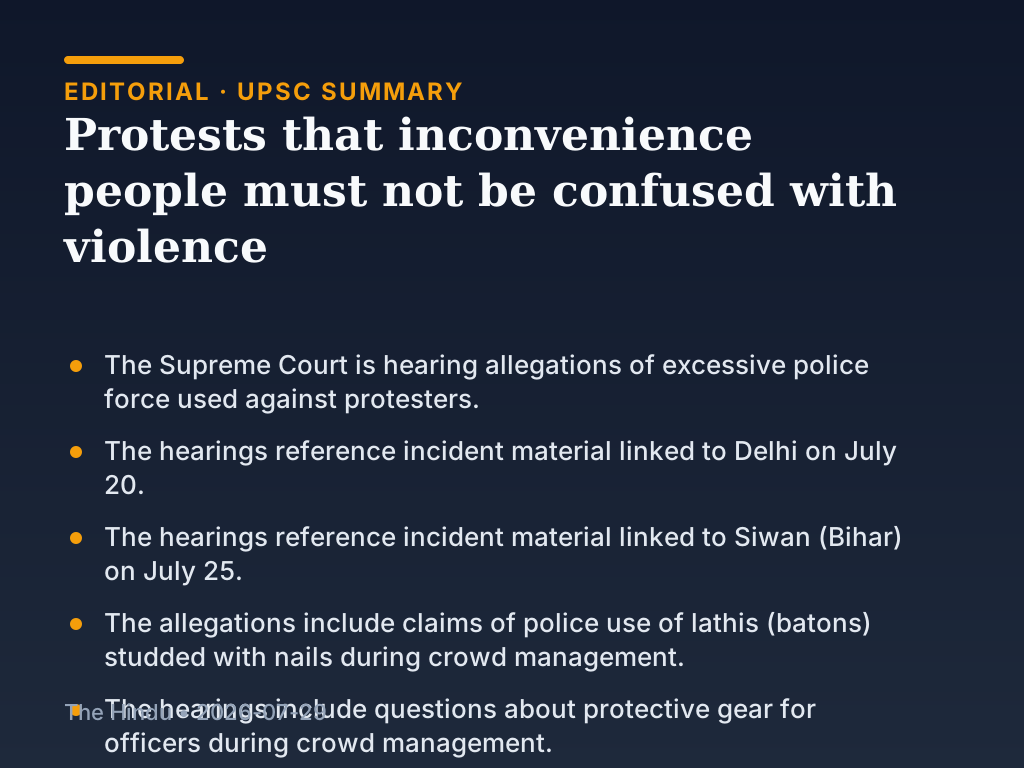
What happened: Supreme Court hearings on alleged excessive force against protesters
The Supreme Court is hearing allegations that police used excessive force against protesters. The hearings refer to incident material linked to Delhi on July 20 and Siwan (Bihar) on July 25.
The allegations include claims that police used lathis (batons) studded with nails during crowd management. The Court’s scrutiny also includes claims about officers lacking protective gear while handling protesters.
The hearings focus on whether investigations into serious injuries are credible when the accused police force is involved in investigation processes.
What existed earlier: permission-based protest regulation and the violence boundary
Related current affairs
- ‘Cow vigilantism’/protest policing and police action—SC / constitutional observations (Right to peaceful protest snippet)
- Apex court mulls guidelines to regulate police conduct during mass demonstrations
- Right to peaceful protest quashed: police excesses can’t be termed ‘PG’
- Court: pellet guns part of a graded police response; protective gear urged
- Right to peaceful protest granted, police excesses can be punished: SC
- Congress leader demands a judicial inquiry into the police action during student protests