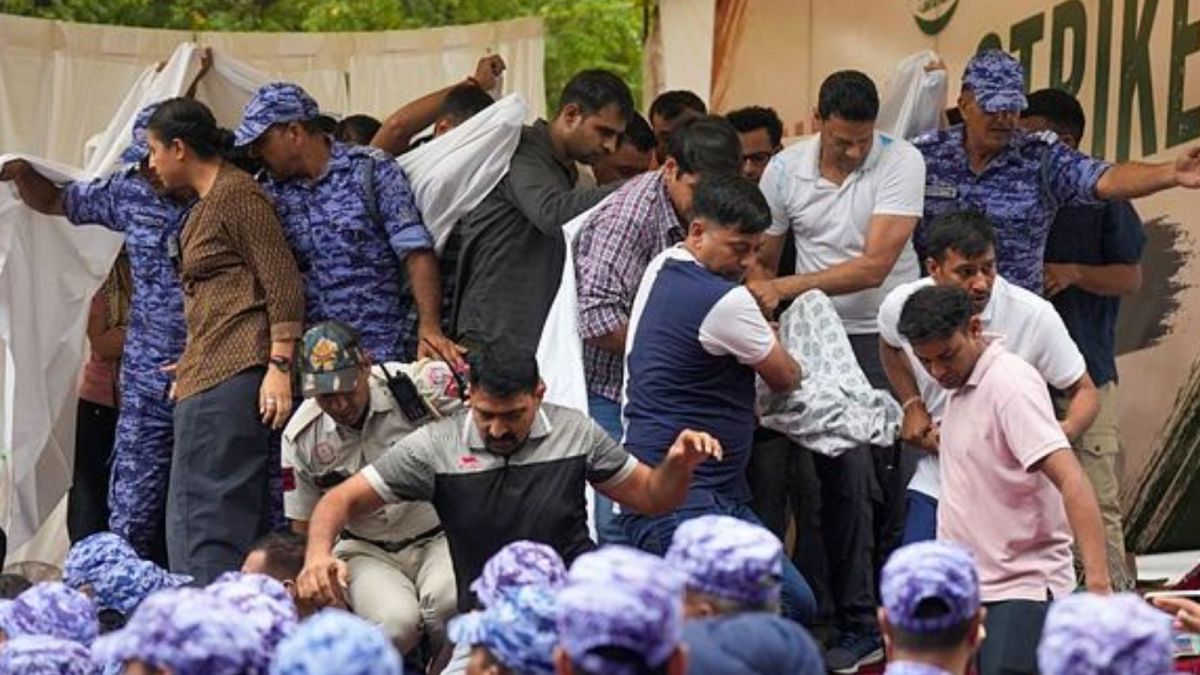
What happened
Students in Mumbai staged a protest after the detention of Sonam Wangchuk. Police booked the organisers and began looking into the demonstration. The episode links a student mobilisation to the larger question of how the State regulates protest activity while maintaining public order.
Background and earlier position
A protest by students is usually examined through the constitutional balance between the right to peaceful assembly and the State’s duty to maintain order. In practice, police and district administration often decide whether a demonstration remains lawful, becomes restricted, or attracts investigation.
What changed now
The Mumbai gathering did not remain only a campus or street protest. Police action against the organisers turned the event into a law-and-order case. That shift makes the episode relevant for questions on police discretion, civic protest, and the limits of public demonstration.
Related current affairs
- Mumbai police book organisers; students protest against Wangchuk’s detention
- Prior permission must for protests, rallies: Ranchi Deputy Commissioner
- Goa protests: CM says ‘won’t allow anti-national movement’
- Police say two ACPs injured in clashes; FIR registered
- Police fire tear gas and protesters rush; crowd scenes at Parliament Street
- Cong., BJP battle on streets as stir by students spirals across country