What happened
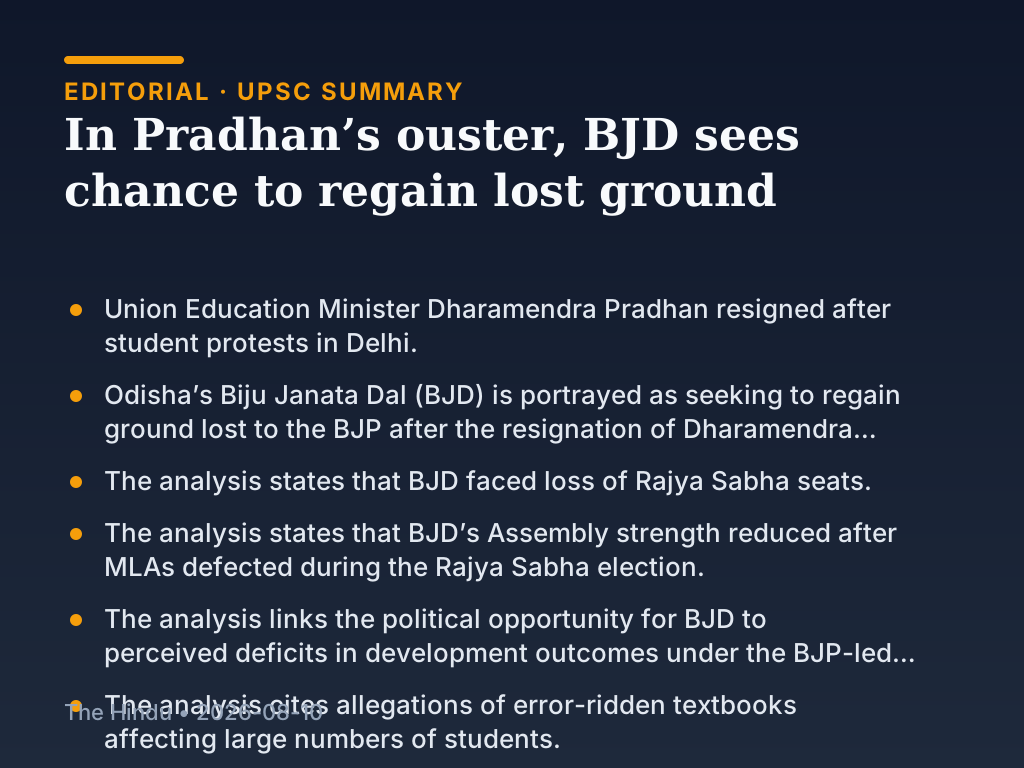
Union Education Minister Dharamendra Pradhan resigned after student protests in Delhi. The resignation is presented as a change in India’s political atmosphere, with Odisha’s Biju Janata Dal (BJD) seen trying to use the moment to regain political ground.
Background and earlier position
The analysis connects BJD’s optimism to perceived public dissatisfaction with the pace of development and outcomes under the BJP-led government. It also describes BJD’s earlier weakening through electoral and organisational setbacks, including the loss of Rajya Sabha seats and a reduction in Assembly strength after MLAs defected during the Rajya Sabha election. Analysts quoted suggest that BJD’s overall weakening was significant but less than what many expected after decades of rule and increasing anti-incumbency pressure.
What changed now
The analysis treats Pradhan’s resignation as the immediate trigger that may change public mood and political opportunity. The analysis contrasts BJD’s “bounce back” narrative with turbulence in other regional parties and highlights criticisms aimed at the BJP administration, including allegations that error-ridden school textbooks affected large numbers of students and allegations of law-and-order deterioration. The analysis also states that BJP’s emphasis on announcing investment has had limited immediate impact on citizens’ living conditions.
Related current affairs
- Despite resignation, Dharmendra Pradhan remains BJP’s strongman in Odisha
- Odisha govt. officers to pay fine for delay in providing public services
- Inter-caste marriage incentive support helps couple build stable life in Odisha
- Haryana CM Nayab Singh Saini on SAD–BJP alliance talks for Punjab 2027
- BJP asks Congress to withdraw support to Soren govt.; Rahul slams police action
- Akali Dal chief’s meet with PM fuels talk of a possible alliance