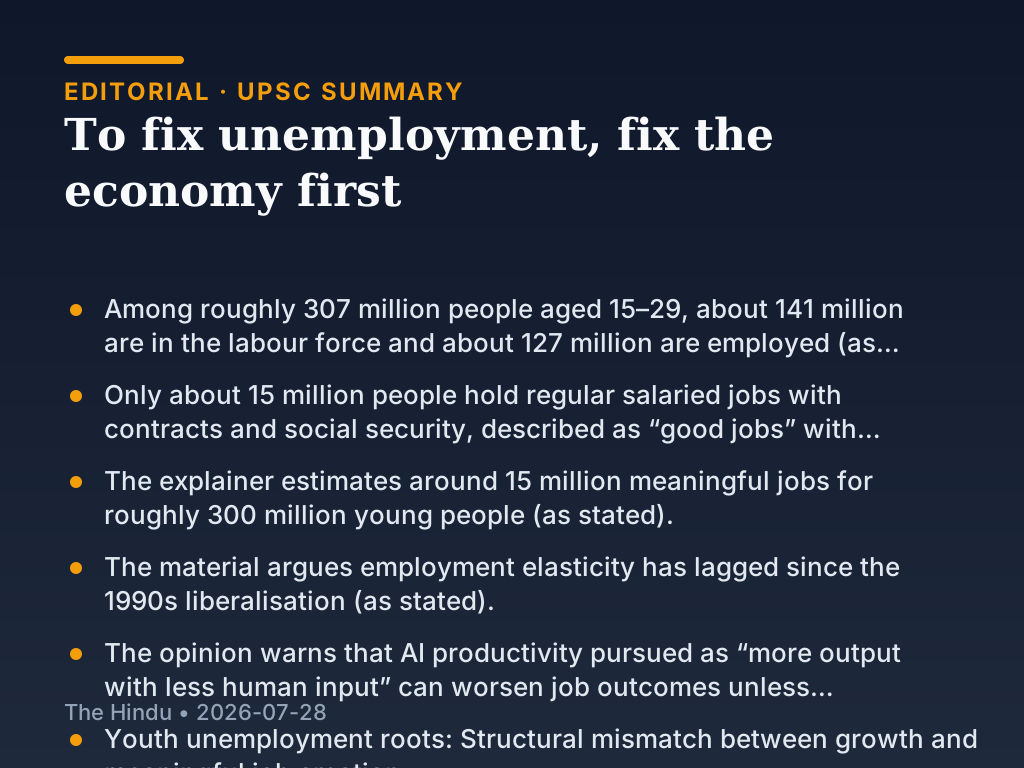
Youth unemployment and “competition for government jobs” are framed as a mismatch between expanding educational aspirations and the labour market’s ability to generate enough meaningful work at scale.
The opinion argues that education reforms alone cannot solve unemployment when the economy grows without generating sufficient productive employment and rising incomes.
The opinion contrasts India’s approach with China’s, claiming China has acted faster to raise incomes and address employment displacement risks linked to automation and AI.
Related current affairs
- Contributors and attribution: V. Gopala Gowda / Maitreyi Krishnan / Gargi Sridharan / Basit Abdullah / V. Gopala Gowda
- The fact is youth unemployment has a household cost
- Why Morocco’s youth are risking their lives to move to Spain
- GenZ's parents have to answer for their crisis
- Out of work and outraged
- Amid Gen-Z protests, LJP MP moves Bill seeking Commission for Youth