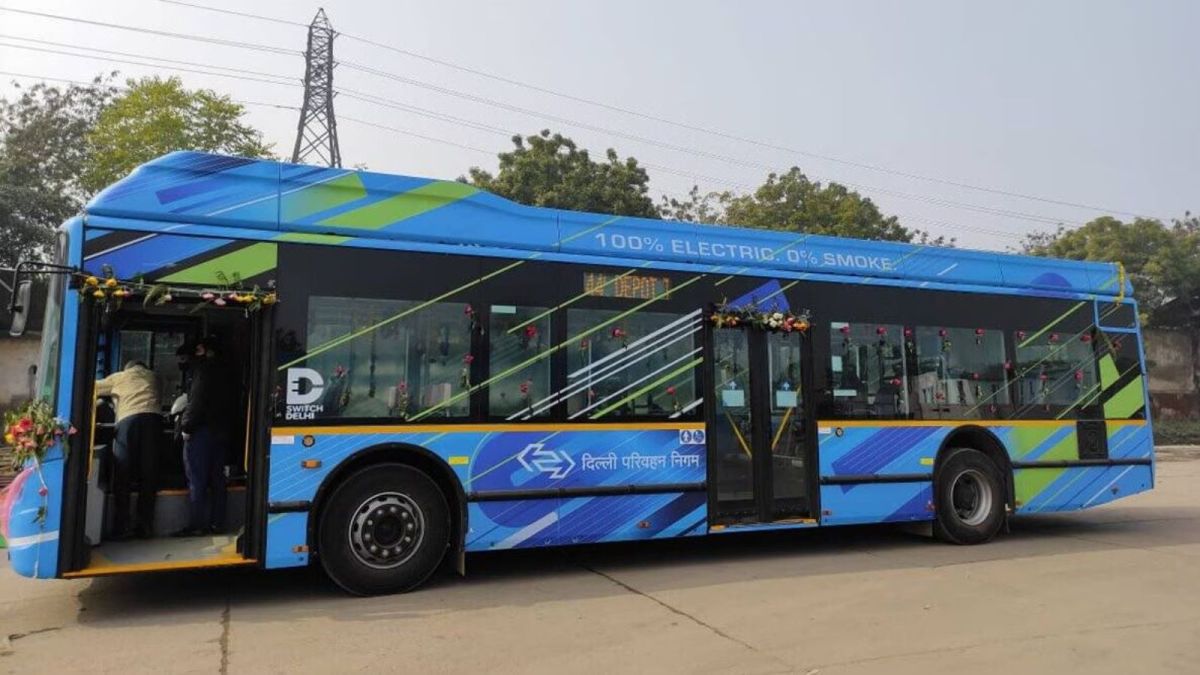
Delhi has announced a major expansion of its electric public transport network. Chief Minister Rekha Gupta said the city will add new air-conditioned low-floor electric buses under Phase I of the PM e-Drive scheme, with the aim of strengthening clean mobility and public transport capacity.
The plan is relevant for UPSC because it sits at the intersection of urban governance, transport policy, and air-pollution control. It also raises a standard policy question: how to expand public transport while improving last-mile connectivity in dense and uneven urban landscapes.
What the Delhi plan includes
Delhi will add 2,800 new electric buses by August 2028 under Phase I of the PM e-Drive scheme. The Delhi government said the city’s fleet will rise to 14,000 buses in 2028-29.
The new buses will be air-conditioned and low-floor, which improves accessibility and passenger comfort. The fleet mix will include 12-metre buses and 9-metre buses.
The smaller buses are meant for narrow roads and rural areas. The Delhi government said this design should improve last-mile connectivity, which is often the weakest link in urban transport systems.
Related current affairs
- CM: Govt to induct 2,800 e-buses in next two years
- E-bus charging points to be established in Himachal Pradesh
- 88,209 EVs subsidized in Madhya Pradesh in FY 2025-26 under PM E-DRIVE scheme
- AQI Tracker (air quality information)
- PM E-DRIVE Scheme (Electric Drive Revolution in Innovative Vehicle Enhancement)
- PM E-DRIVE and EV charging: Rs. 2,000 crore allocation and unlicensed nature of EVCS