What happened (core claim)
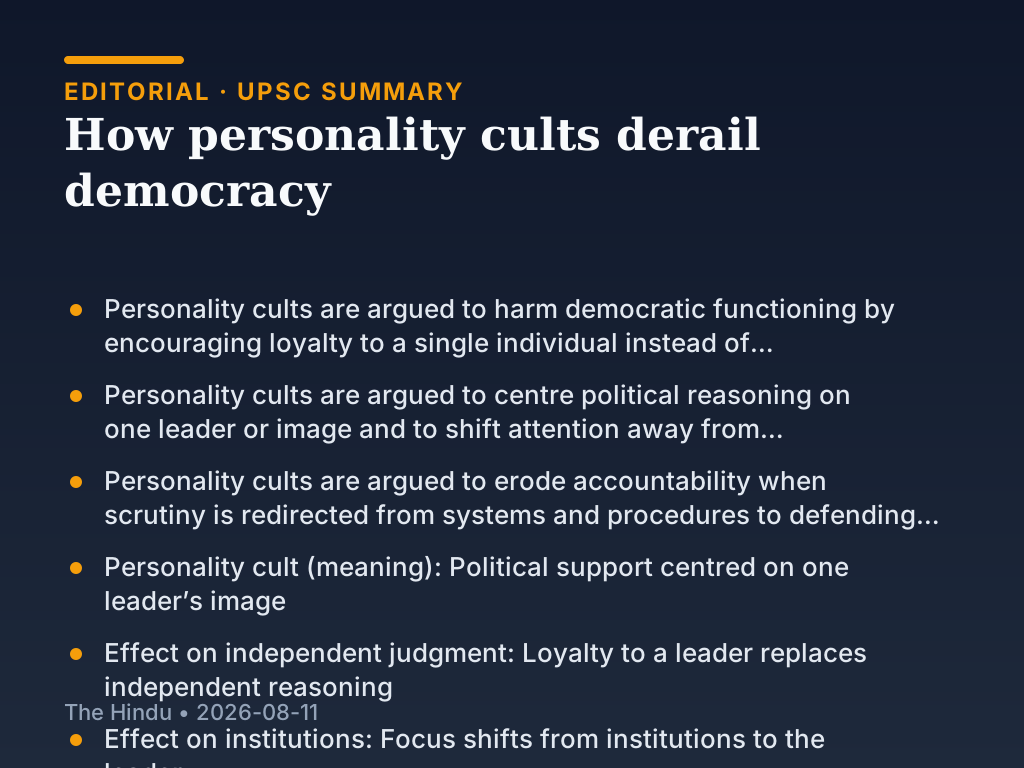
An opinion argues that personality cults harm democratic systems. Personality cults encourage citizens and institutions to substitute loyalty to a single individual for independent judgment. When political reasoning and public debate become centred on one leader or one image, democratic decision-making can move away from institutions and evidence-based scrutiny.
Background and earlier position (what democracy needs)
Democratic governance depends on rule-based institutions and accountability through procedures. Independent judgment by citizens and public institutions helps evaluate political choices against facts, legal rules, and institutional constraints. Institutional accountability is intended to outlast individual leaders so that governance failures and performance are judged through systems rather than personal reverence.
What changed now (how a personality cult alters incentives)
The opinion argues that personality cults change incentives in ways that weaken democratic functioning: Public debate and political reasoning become centred on a single leader or image instead of institutions, policies, and evidence.Accountability weakens because scrutiny can be redirected away from institutional performance toward defending or praising a person.Independent judgment becomes less common when loyalty is treated as the primary political virtue.Because the concern is framed as systemic, the opinion treats personality cults as a governance-process risk rather than a purely personal preference.
Related current affairs
- Editorial/Opinion: The Editorial Page (title visible: “Opposition cannot only oppose, what it needs to propose”)
- “Neither government nor Opposition…” (companion or continuation block within the editorial page)
- Congress steps up attack on NTA over UGC-NET re-test
- How personality cults derail democracy
- What the CTHURSSAY campaign ends in the age and India
- Triumph of justice vs Hussain a BJP man: parties trade barbs