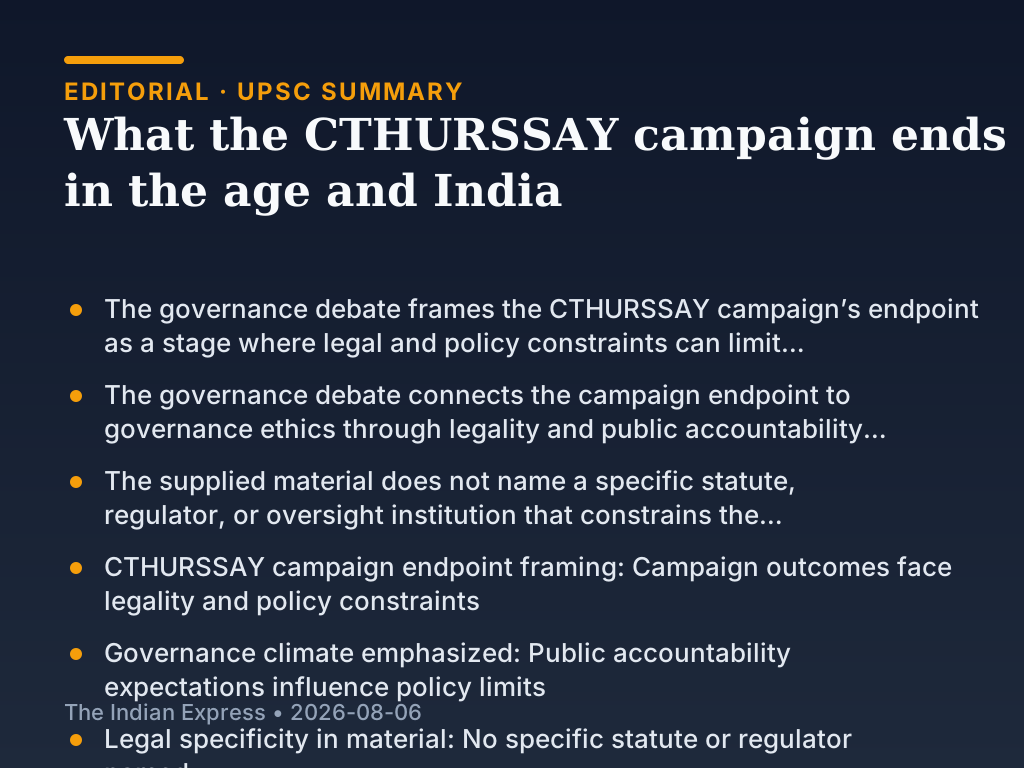
What happened: the CTHURSSAY campaign’s endpoint meets accountability constraints
A governance debate about the CTHURSSAY campaign highlights the campaign’s endpoint as a point where legality and policy constraints matter. The core claim is that the CTHURSSAY campaign’s trajectory is more likely to face limits when public actions and policy outcomes must satisfy legal authority and public-accountability expectations.
Background and earlier position: campaigns operate inside governance rules
Public campaigns and policy advocacy operate within governance systems that restrict what actors can do and what outcomes they can demand. Accountability norms generally require that public claims match the legal powers of decision-makers, and that actions remain within rules that enable scrutiny and corrective action.
What changed now: an accountability-forward governance environment increases the cost of unchecked trajectories
The “age and India” framing in the debate shifts focus from campaign momentum to enforceable outcomes. In an accountability-forward governance environment, the path from campaign advocacy to policy action encounters higher friction from legal and policy thresholds, because outcomes must be defensible and reviewable.
Related current affairs
- How personality cults derail democracy
- LETTER TO THE EDITOR: Paper leak law
- Yeah the kids are alright
- The youth have risen against authoritarianism (Letters to the Editor)
- Elections are won with votes, respect earned through public service: V-P
- FCRA registration and compliance mechanism: eligibility, process, and financial discipline