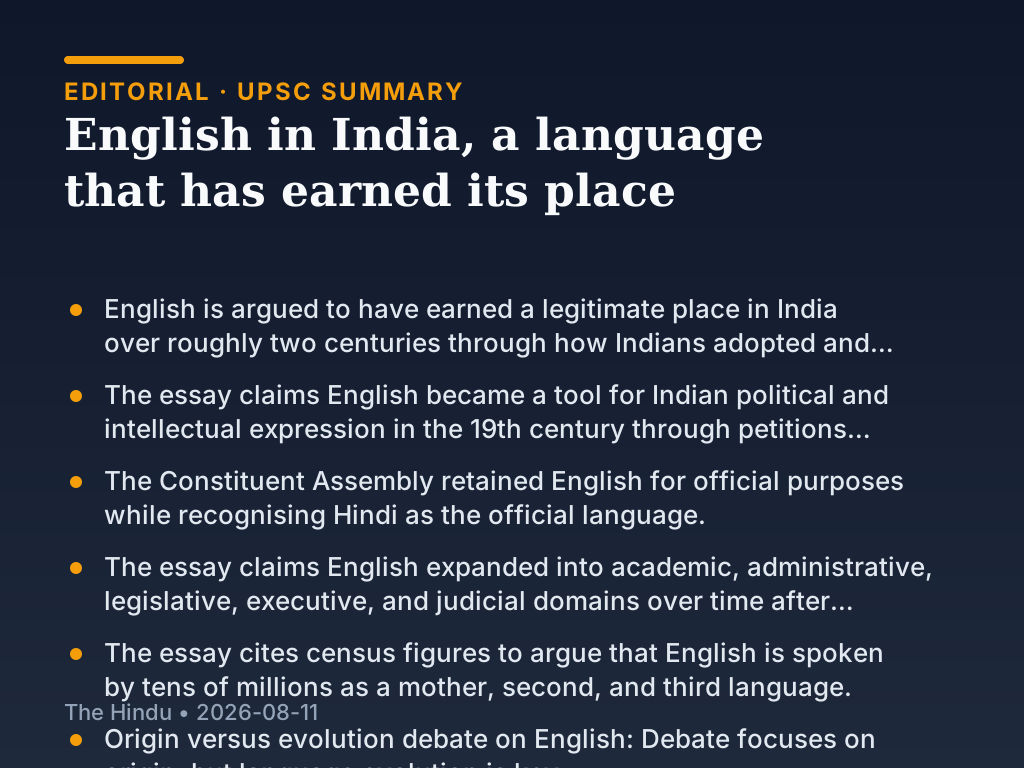
The English-in-India debate has been revived through a Supreme Court observation about English being indigenous, and the UPSC-relevant question is whether origin should decide a language’s status in governance. In response, Y.L. Srinivas argues that a simplistic English-versus-Indian-languages contest is misleading, and that India’s multilingual reality requires nurturing multilingualism rather than locking languages to historical origin.
What happened (debate revived around English’s “indigenous” status)
A Supreme Court observation revived public debate on whether English is indigenous to India. The essay responds by rejecting the idea that a language can be judged solely by where it originated historically, and instead focuses on how English has been adopted, reshaped, and institutionalised in India across politics, administration, and everyday life.
Background and earlier position (language legitimacy vs origin)
The essay’s central position is that colonially introduced languages cannot be permanently confined to their origins because language communities continuously reshape languages to suit local realities. The essay also sets up a rejection of an “either English or Indian languages” framing, arguing that the real policy direction should be multilingualism, where multiple languages can coexist and serve different functions.
What changed now (English’s place strengthened through Indian adoption and reshaping)
Related current affairs
- Maharashtra makes Marathi proficiency mandatory for app-based cab drivers too
- SC observes: ‘All injuries to individuals… be inferred as police excesses’ (headline summary)
- Demands for inclusion of Gor Boli in the Eighth Schedule; no fixed criteria for language inclusion
- ‘3-Language policy’: Come to us if you want to…; ensures teachers
- Can’t English be considered an Indian language, asks top court
- Marathi and the long politics behind the language question