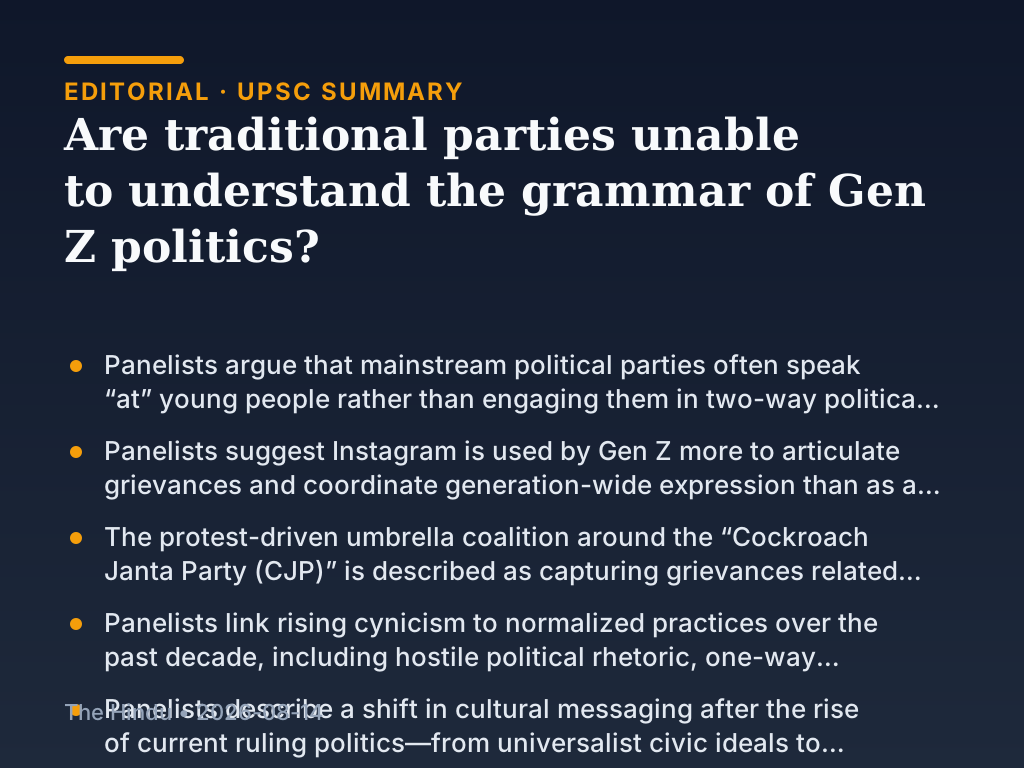
What happened: youth-led activism exposes a party–youth communication gap
A moderated panel discussion in The Hindu uses Gen Z political activism and recent youth-led protests to argue that many mainstream political parties communicate with young citizens without real two-way engagement. Panelists describe a “gaping hole” in political discourse, arguing that young people feel denied meaningful influence over decisions affecting their future, which can deepen resentment and cynicism.
The discussion highlights how Gen Z views social media (for example, Instagram) less as a direct tool to improve material prospects and more as a platform to articulate grievances and coordinate a shared, generation-wide expression. In the panel’s framing, this coordination is not limited to single-issue campaigning; it is a way to align many grievances under one public voice.
The panel compares the language used to mobilise young voters with the language used by mainstream parties. Panelists argue that mainstream party messaging often stays rooted in older frames around jobs, security, education, and culture, while Gen Z concerns require different political vocabulary and more responsive engagement.
Background and earlier position: parties mirror state messaging and older ‘rules of the game’
One panelist argues that political parties often reflect the State’s own messaging and therefore fail to translate Gen Z concerns into an appropriate political vocabulary that speaks to youth experiences and expectations.
Related current affairs
- In Modi’s outreach to Gen Z, parents are the key target
- DMK showdown / Bilingual or divisive messaging? (block header visible)
- Why the saffronarivar couldn’t hear the young
- Why the saffron parivar couldn’t hear the young
- After Bankipur defeat, BJP concludes it lost the battle of narrative
- Express special: 7 years of Aug 5: Why Omar Abdullah is talking Robert Frost and ‘promises to keep’