What happened
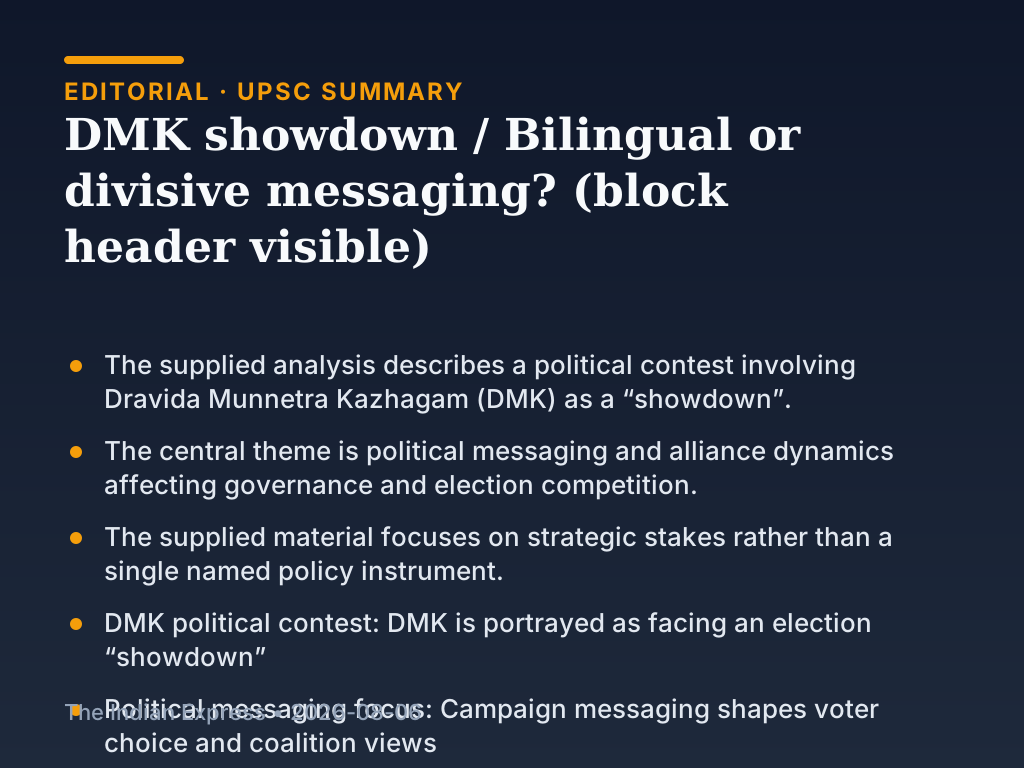
The supplied analysis discusses a political contest described as a “showdown” involving the Dravida Munnetra Kazhagam (DMK). The central theme is how political messaging and alliance dynamics influence governance and electoral outcomes, rather than focusing on a specific policy measure.
Background and earlier position
In Tamil Nadu politics, party competition often depends not only on ideology and governance records but also on alliance signalling and campaign messaging. The analysis frames the DMK contest within this wider pattern: voters and political partners respond to how a party positions itself, and to how alliance expectations are communicated during election cycles.
What changed now
The present discussion shifts attention to the strategic framing of the contest—how the messaging and alliance narrative changes the perceived stakes for governance and election dynamics. The supplied material indicates a focus on electoral strategy and political bargaining, instead of a new institutional change or a clearly named policy instrument.
Related current affairs
- Chirag Paswan appoints Surender Vivek as LJP(RV)’s Bihar chief
- Death of Trinamool leader and corruption taint in Bengal politics
- Are traditional parties unable to understand the grammar of Gen Z politics?
- Panel: ‘If I deliver 10,000 jobs as promised, it will build pressure on other MLAs’
- In Modi’s outreach to Gen Z, parents are the key target
- Why the saffronarivar couldn’t hear the young