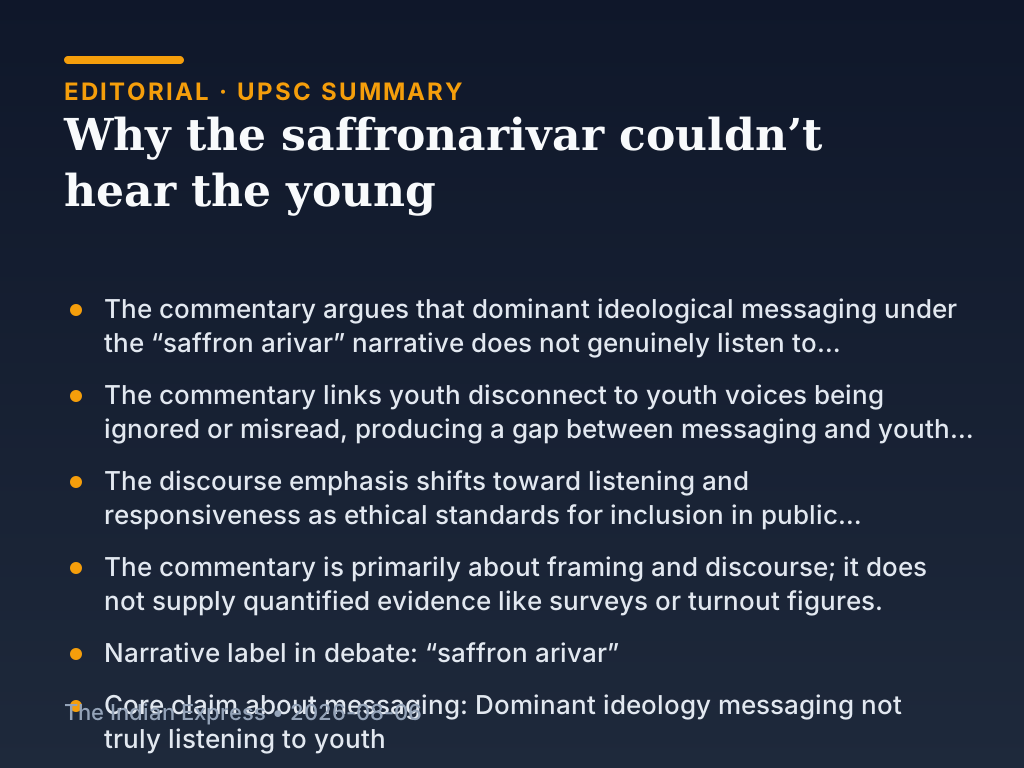
What happened (the core claim)
A commentary addresses discourse around the political narrative called “saffron arivar” and its reported inability to connect with young people. The commentary’s central claim is that dominant or established ideological messaging did not genuinely engage with youth concerns. As a result, youth voices appear ignored, or youth priorities are misunderstood, creating a distance between political communication and younger people’s aspirations.
Background and earlier position
In public life, political communication often relies on established ideological themes. The commentary’s argument suggests that when such messaging becomes “preset” (fixed around certain narratives), it can stop being interactive. In that situation, youth concerns are less likely to be heard in their own terms, and youth expectations may not shape the direction of political messaging.
What changed now (what the discourse is highlighting)
The ongoing discourse is framed as a correction attempt: it points out that youth disconnect is not only about youth being uninterested, but about political messaging failing an essential ethical function—listening. The emphasis shifts from “how loudly the message is delivered” to “whether the message reflects youth realities and responds to youth needs.”
Related current affairs
- Why the saffron parivar couldn’t hear the young
- Mohan Bhagwat on “Ghar wapsi” remark: ‘people don’t need opinions’ (opposition reacts)
- The disruptive rise of India’s new political generation
- Are traditional parties unable to understand the grammar of Gen Z politics?
- In Modi’s outreach to Gen Z, parents are the key target
- DMK showdown / Bilingual or divisive messaging? (block header visible)