What happened
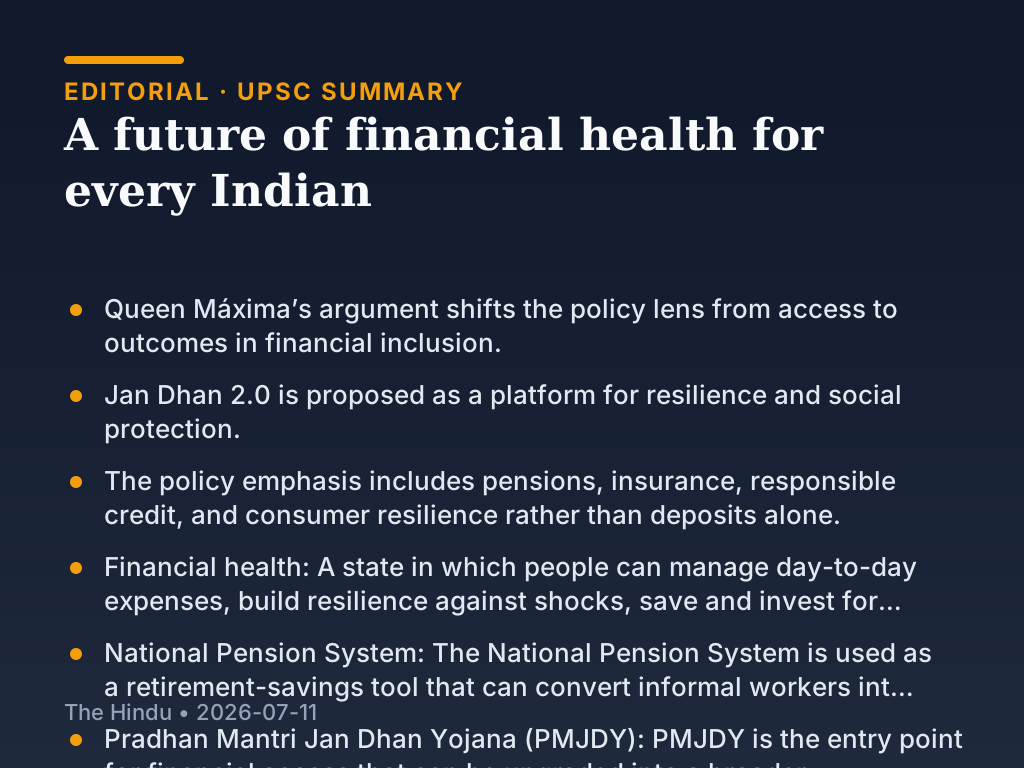
Queen Máxima of the Netherlands, in her role as the United Nations Secretary-General’s Special Advocate for Financial Health, has argued for a broader approach to India’s financial inclusion agenda. Her core point is that financial health means more than having a bank account; it means having the right financial policies, products, and services to handle daily expenses, absorb shocks, save, invest, and plan for the future.
Background and earlier position
India has already made large gains in account ownership over the past decade, helped by the expansion of basic financial access through the Pradhan Mantri Jan Dhan Yojana (PMJDY) and the wider digital payments ecosystem. Account access alone is not enough if households still lack resilience, insurance, or retirement savings.
The policy discussion links financial health to the broader development ambition of Viksit Bharat 2047. The logic is that resilient households support resilient growth, and resilient growth supports long-term prosperity.
Related current affairs
- NMFI/PMJDY and related schemes report progress in financial inclusion (bank accounts, insurance, pensions, and credit)
- DoLR explores convergence of Digital Public Infrastructure for land governance and digital lending with RBI Innovation Hub
- India Post Payments Bank marks 9th Foundation Day; launches DakPay Sound Box for merchants and new digital platforms (Digital Insurance Technology Platform, Digital Mutual Fund Platform)
- Union Minister Annpurna Devi hails 12 years of Pradhan Mantri Jan-Dhan Yojana
- Prime Minister highlights transformative impact of Jan Dhan Yojana
- Not ‘delulu’ — an AI tutor for every child in India