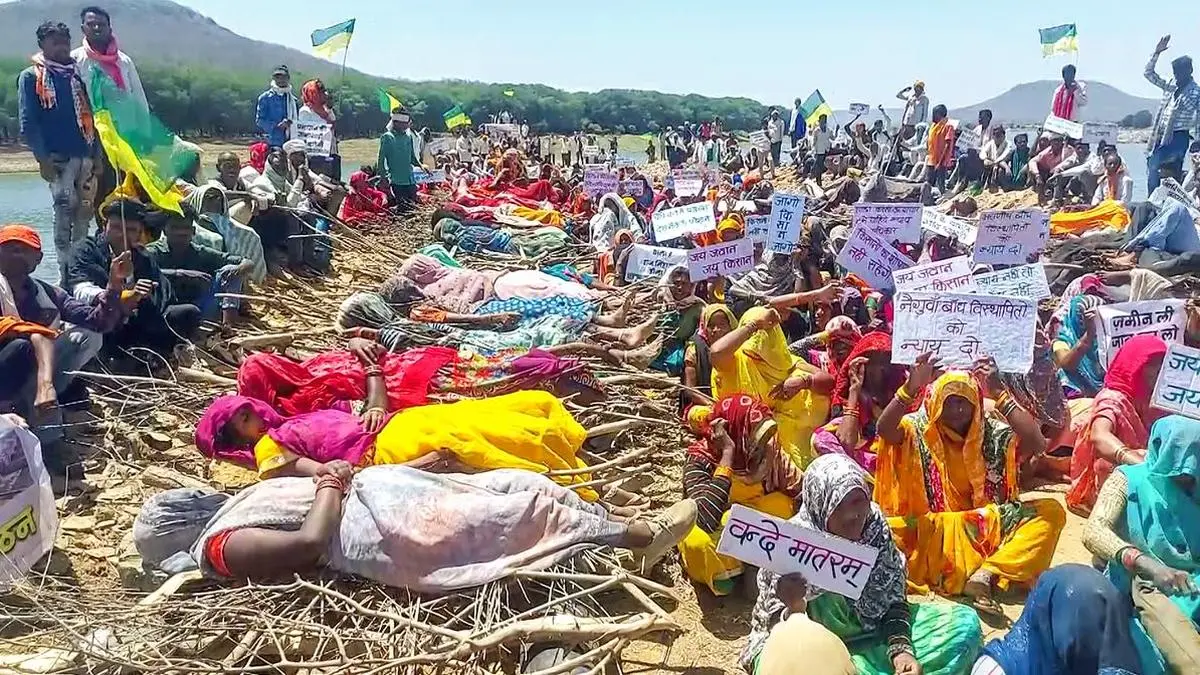
Madhya Pradesh protests against the Union government’s Ken–Betwa Link Project highlighted a governance conflict around displacement. The reported focus was rehabilitation inclusion and compensation fairness, allegations about gram sabha consent and beneficiary selection, and environmental risks because the project area lies partly in Panna Tiger Reserve.
What happened in Madhya Pradesh (reported events)
Hundreds of villagers, mostly tribal people, reportedly protested for two weeks at a site in Chhatarpur district against the Union government’s ₹44,000 crore Ken–Betwa Link Project. On July 19, Madhya Pradesh police reportedly moved to clear the protest site. The reported police action included detention of local activist Amit Bhatnagar (founder of Jai Kisan Sangathan), and hospitalization after detention following his indefinite hunger strike for 14 days. Police reportedly picked up nearly 150 protestors, mainly from Panna district, and transported them back to their villages. On July 23, Amit Bhatnagar suspended his 18-day fast after government assurances that people excluded from rehabilitation would be included in the process.
Background: Ken–Betwa within the National Perspective Plan (NPP)
Ken–Betwa is presented as the first of 30 proposed river-linking projects under the National Perspective Plan (NPP). The NPP was formulated in 1980 to transfer surplus water from rivers to deficit regions. Ken–Betwa is described as transferring surplus water from the Ken River to the Betwa River by constructing the Daudhan Dam and a 221-kilometre canal system, including a 2-kilometre tunnel. The project is described with expected power and water outcomes: reported generation includes 103 MW hydropower and 27 MW solar power, along with drinking water provision to multiple districts of Madhya Pradesh and Uttar Pradesh to address drought-linked water scarcity in Bundelkhand.
What protesters demanded: rehabilitation eligibility, consent processes, and parity with state projects
Related current affairs
- Tribals escalate protest against Ken-Betwa river-linking project; demand higher rehabilitation package
- Activist ends fast against Ken-Betwa linking after 18 days
- Police clear protest against Ken-Betwa, other projects in M.P.
- Hunger stir against Ken-Betwa Link Project enters 15th day
- Why Adivasis are resisting the Ken-Betwa river-linking project
- M.P. CM Mohan Yadav orders officials to hear Ken–Betwa project-affected families