After 12 years in power, Dharmendra Pradhan’s exit exposes BJP’s shrinking political legroom
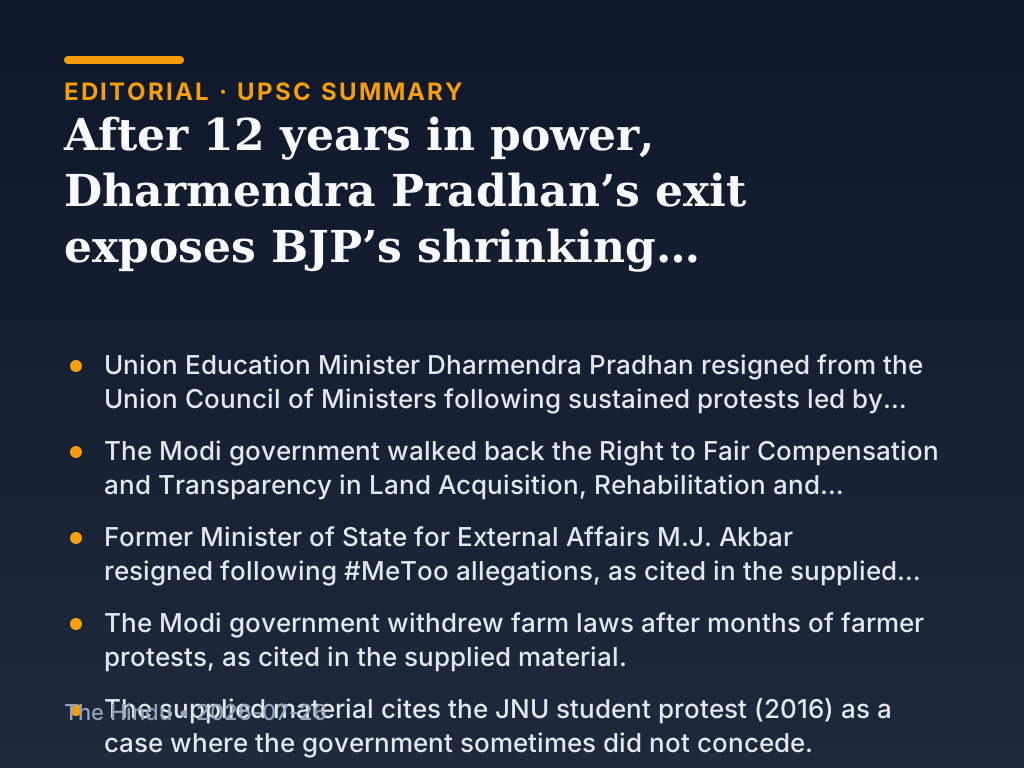
Union Education Minister Dharmendra Pradhan resigned after sustained protests led by the Cockroach Janta Party (CJP) and young demonstrators, raising questions about protest-driven executive accountability.
- Union ministers can resign or be reshuffled when political pressure makes continuing untenable; the Council of Ministers is answerable to the Lok Sabha.
- Sustained protests can raise political costs for the government; government responses vary between concessions and holding firm.
- The cited examples include walking back a land acquisition ordinance after re-promulgations, withdrawing farm laws after prolonged protests, and a minister’s resignation after #MeToo allegations.
- The cited material describes a Gen Z protest cohort (protesters who were children when Modi came to power) cutting across caste, community, and class.
Union Education Minister Dharmendra Pradhan resigned from the Union Council of Ministers following sustained protests led by the Cockroach Janta Party (CJP) and young demonstrators. The argument presented in the supplied material links the resignation to recurring governance patterns where the Modi government adjusts positions under sustained pressure, while contrasting cases where the government sometimes did not concede during major protests.
What happened
Dharmendra Pradhan resigned after sustained protests continued over time under leadership by the Cockroach Janta Party (CJP) and young demonstrators.
UPSC may frame this as a study of how sustained protest mobilisation affects executive decisions and ministerial responsibility, and how different protest cohorts can change the government’s perceived room for manoeuvre.
Related dispatches