What happened (diagnostic claim about social-sciences doctoral evaluation)
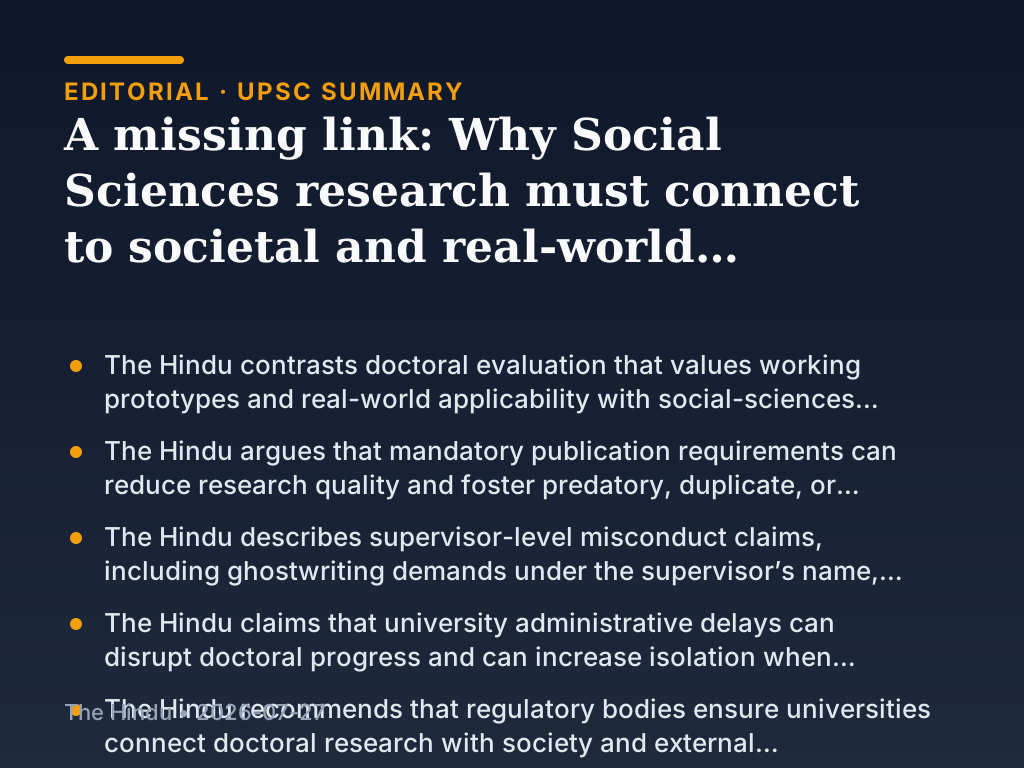
The Hindu links these incentives to research-quality problems and research-integrity risks, especially when doctoral candidates face pressure to meet publication and completion expectations. The opinion also describes supervisor-level misconduct claims and university administrative delays that can disrupt doctoral progress. The opinion further claims that these conditions can push doctoral scholars into isolation on topics chosen mainly to satisfy compliance requirements rather than to address societal needs.
Background and earlier position (incentives that reward compliance outputs)
The Hindu argues that India’s doctoral evaluation emphasis on dissertation length and journal publication status encourages compliance-driven research. In the opinion’s view, this weakens the connection between social-sciences research and the problems faced by communities, institutions, employers, and public decision-makers.
Related current affairs
- Higher education faces three fault lines
- Higher education faces three urgent challenges
- Engineering education for a new India: preparing future engineers for innovation
- DU principals, teachers seek changes in NEP rollout
- NEP 2020 democratized learning opportunities for youth from Tier-2/3 towns, says Dr Jitendra Singh at Doda conference