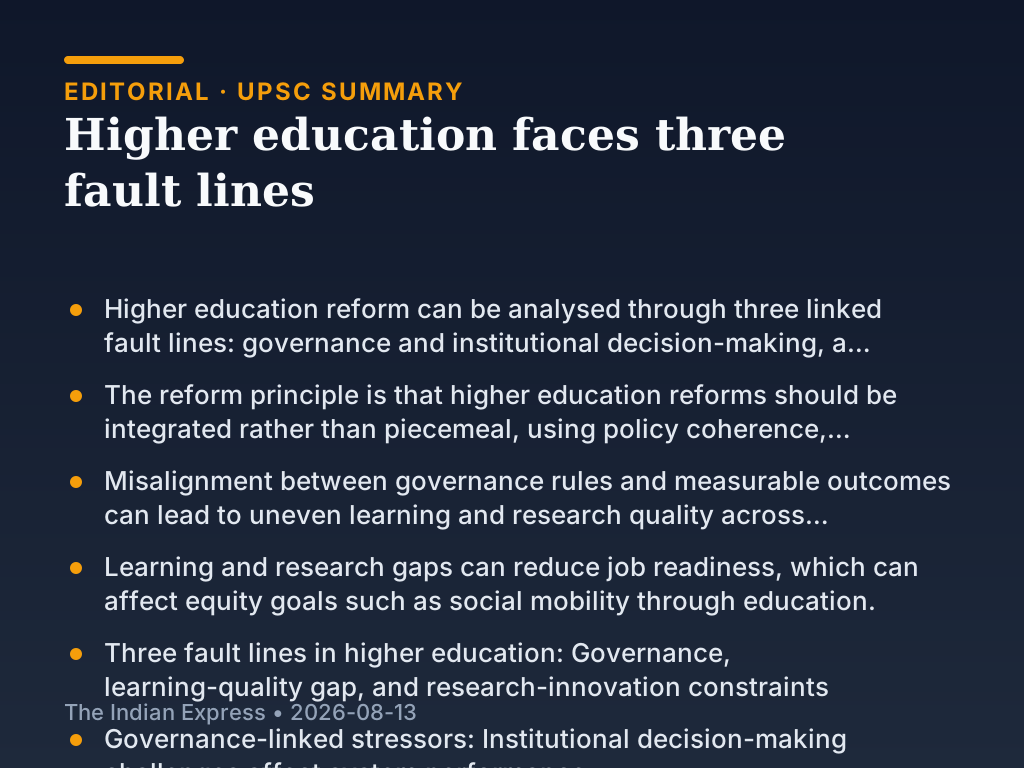
What the issue is: higher education reform needs linked fixes
Higher education in India faces stress from structural problems that reinforce one another across governance, learning quality, and research and innovation. The central argument is that reforms cannot be isolated because weaknesses in one area weaken outcomes in the other areas.
What happened or what is being argued now: three fault lines and their interaction
The problem is commonly described through three fault lines. These fault lines are treated as connected rather than separate.
Governance and institutional decision-making: challenges that shape how universities plan, take decisions, and execute reforms.Quality and learning-outcome gap: a gap between what students are expected to learn and what they actually learn; the gap is linked to funding patterns and regulatory incentives.Research and innovation ecosystem constraints: limits that weaken research capacity and reduce the translation of academic work into employable skills and careers, affecting social mobility.
Background and earlier position: why outcomes remain uneven
Related current affairs
- Higher education faces three urgent challenges
- Higher education faces three hurdles
- A missing link: Why Social Sciences research must connect to societal and real-world issues
- Engineering education for a new India: preparing future engineers for innovation
- DU principals, teachers seek changes in NEP rollout
- NEP 2020 democratized learning opportunities for youth from Tier-2/3 towns, says Dr Jitendra Singh at Doda conference