What happened: youth protests over NEET/entrance-examination issues sparked a wider debate
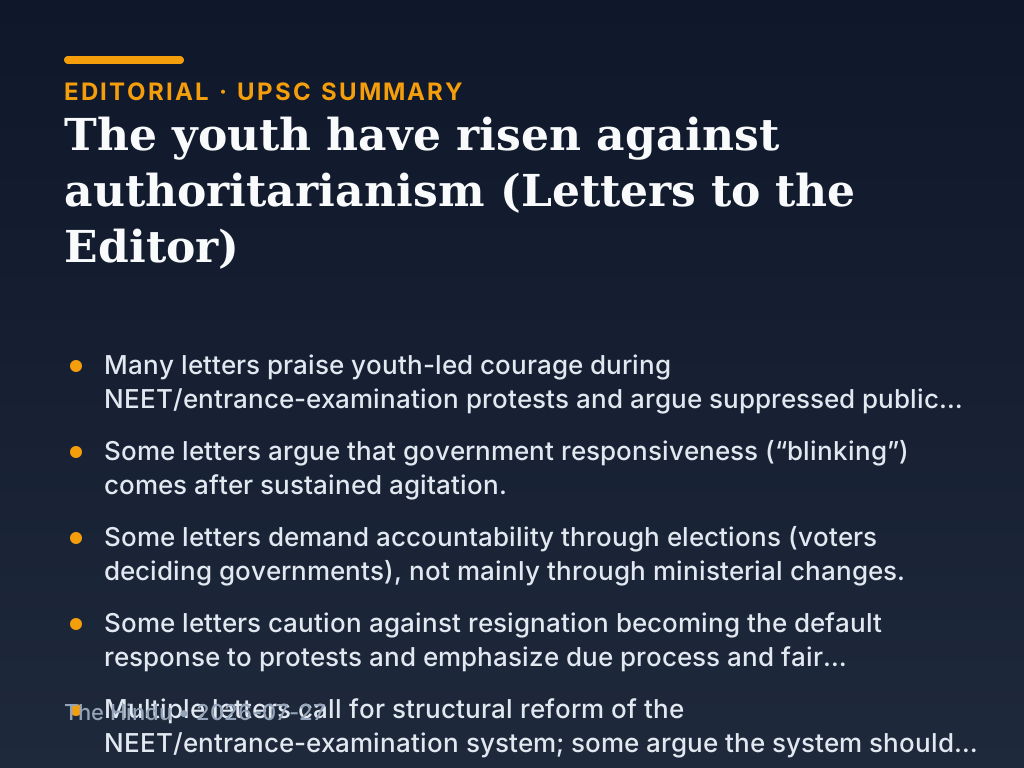
Public letters reacting to NEET/entrance-examination protests focus on the government’s handling and the broader democratic question of how societies respond to dissent. Many letters praise youth courage and argue that suppressed public pressure cannot remain permanently unacknowledged. Several letters describe an expectation that government responsiveness occurs only after sustained agitation and stress that citizens remain the sovereign source of political authority.
Background and earlier position: accountability, due process, and legitimacy under protest
The letters present competing views on accountability under a protest environment. Some letters argue that accountability should eventually be enforced through elections—voters deciding who remains in power—rather than relying mainly on ministerial changes. Other letters argue that calls for resignation should not become the default reaction to protests, and they stress accountability through due process and fair investigations. Several letters also point to alleged threats and abuses in the protest response, and they treat these claims as reasons for demanding a fair and credible process.
Beyond governance, letters also debate education-admission reform. Several correspondents ask for structural reform of the examination system. Some letters go further and argue that the examination system should be abolished. Others criticise selective media coverage and request improved transparency, balance, and credibility in reporting. A few letters highlight the protest’s non-religious character and disciplined approach, and they suggest that organised political parties may have failed to effectively channel grievances.
What changed now: the protest debate broadened from grievances to constitutional-style accountability arguments
Related current affairs
- What the CTHURSSAY campaign ends in the age and India
- Why the saffronarivar couldn’t hear the young
- LETTER TO THE EDITOR: Paper leak law
- Yeah the kids are alright
- FCRA registration and compliance mechanism: eligibility, process, and financial discipline
- The voice of India’s youth must be heard inside Parliament