What happened: IISER governance concerns are linked to weak leadership continuity
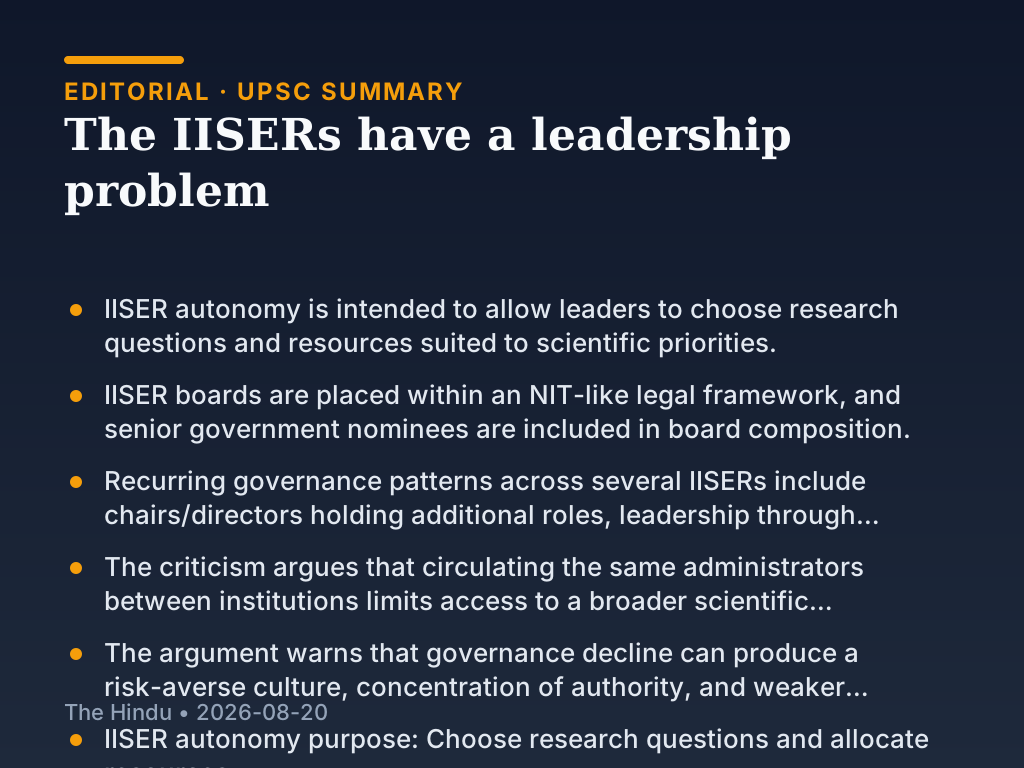
The governance of India’s Indian Institutes of Science Education and Research (IISERs) faces criticism because leadership arrangements are often not stable or fully aligned with a basic-science research mission. The concern is that governance choices—especially board structure and appointment practices—allow interim decision-making and delayed leadership to persist, which then weakens institutional autonomy and scientific delivery.
Background and earlier position: autonomy exists on paper, but board design constrains it
IISER autonomy is intended to let academic leadership decide research questions and scientific resource use. However, IISER board structures are placed within a National Institute of Technology (NIT)-like legal framework (similar governance structure as NIT boards). This framework includes senior government nominees in the board composition. In such a design, the quality of leadership and the speed of appointments become critical, because delays and interim arrangements can convert autonomy into incomplete, short-term authority.
The criticism also highlights a leadership-credential mismatch. IISERs have a basic-science education and research purpose. When leadership backgrounds are more tied to administration, industry, medicine, or domains not closely connected with leading basic-science research institutions, the institutions’ scientific credibility and long-term vision are argued to suffer. The chair (board head) is not necessarily required to be a scientist, but research credibility is stressed as important for IISER functioning.
What changed now: recurring patterns of “additional charge”, vacancies, and delayed appointments
Related current affairs
- JNUSU stages protest outside IIT Delhi over MSc student’s death
- Supreme Court extends NTF timeline till Oct 31, 2026 for Final Report
- NTF on Mental Health of Students in HEIs conducts field visits to 30 institutions across 10 states
- Progress and scale of ABC/APAAR: registrations, IDs created, and credit records uploaded