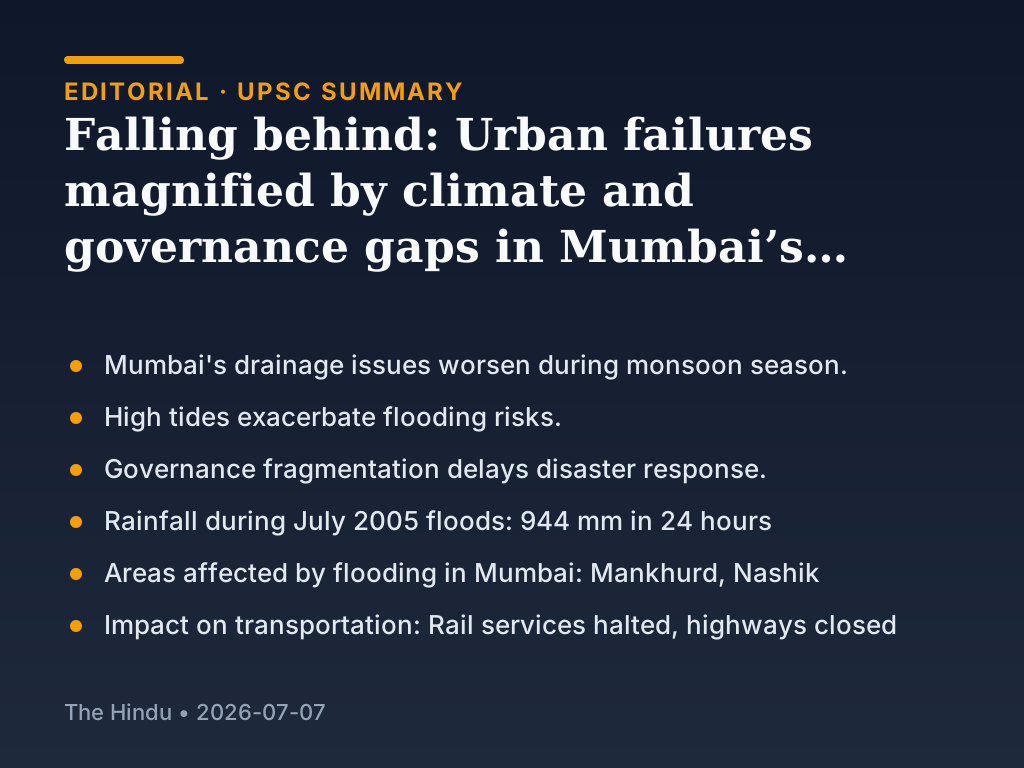
The editorial argues that Mumbai’s flooding during an unusually intense southwest monsoon period exposes structural and governance shortcomings rather than mere “acts of god.” It notes how moist monsoon winds have produced heavy rainfall across western India—especially along the Konkan coast—and how rainfall intensity is particularly damaging in urban settings where drainage and catchments can only handle limited bursts.
In Maharashtra, river catchments were overwhelmed in places such as around Nashik, while in Mumbai the drainage system’s effectiveness was further reduced by high tides, compounding stormwater overload.
The piece highlights cascading disruptions: landslides halted Mumbai–Pune rail services, multiple highways were closed or severely affected, and flooding on key expressways increased the overall cost of the disaster.
Even non-weather events are included as symptoms of vulnerability—such as the collapse of a chawl in Mankhurd that killed children, and other incidents reported in the city.
Central to the editorial’s assessment is that Mumbai’s geography and urban form create persistent flood risk. Much of the city is built on reclaimed land, former marshes, tidal flats and low-lying coastal areas, meaning that high tides can coincide with rainfall to trap water and increase inundation.
Related current affairs
- Treat waterlogging as disaster, work on war footing: L-G to officials
- Four-storey building collapse leaves 10 dead in Maharashtra
- The urban nightmare — a fire with no escape
- MoHUA publishes model building bye-laws and seismic safety guidance; BIS standards and NDMA earthquake guidelines support structural audits and resilience
- Woman, her two minor children die in blaze at Lodhi Colony residence
- 158 killed in Nepal flash flood, hundreds missing