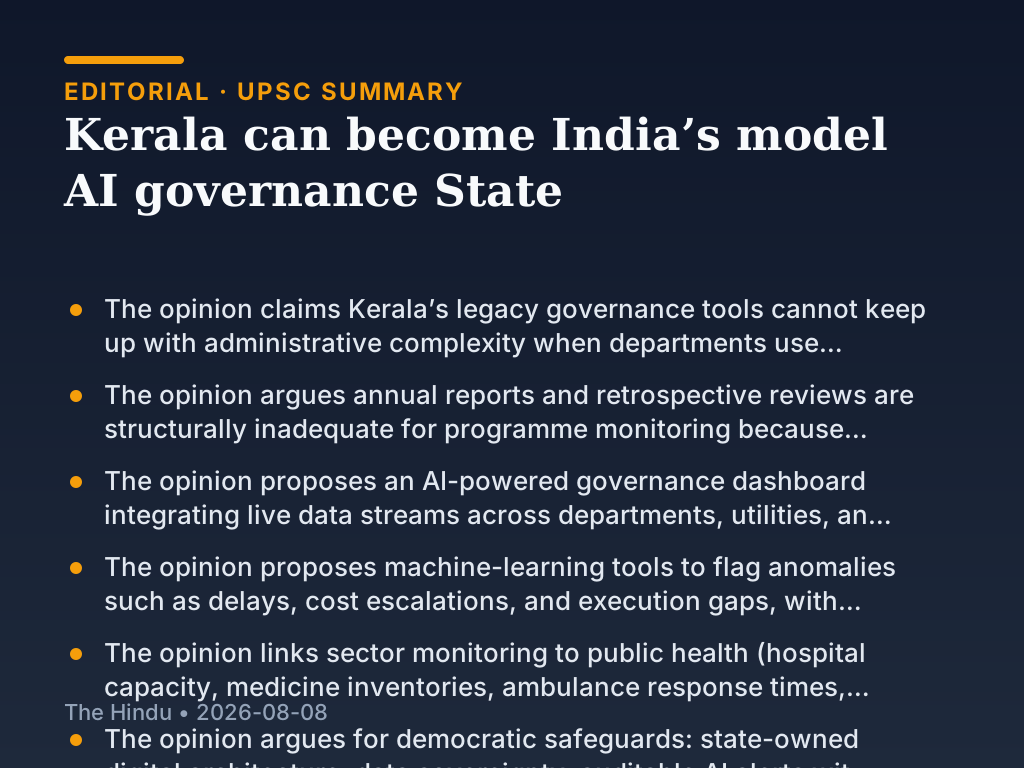
What happened: proposal for an AI “digital nervous system” for Kerala governance
An opinion in The Hindu argues that Kerala’s administrative evolution has reached a turning point: governance complexity has started to outpace legacy tools, particularly when departments operate with fragmented information flows, delayed reporting, and department-centric monitoring. The opinion argues that annual reports and retrospective reviews have become structurally inadequate because issues are often discovered only after delays and expenditures have already occurred.
Background and earlier position: where monitoring and accountability get stuck
The opinion describes scheme design and evaluation in Kerala as often working within narrow sector boundaries across health, power, local self-government, social welfare, finance, agriculture, and education. It says incompatible reporting formats between departments limit cross-sector tracking. It also argues that many programmes lack real-time monitoring, so gaps such as regulatory leakages, cost overruns, beneficiary exclusion, and execution delays are detected only months later.
The opinion adds that late detection raises the cost of correction and restricts corrective action due to political and administrative constraints. It further argues that fiscal leakages across departmental lines go unnoticed, and policy failures are identified only after money is exhausted—turning accountability into largely post-hoc explanation rather than prevention.
What changed now: proposal of an AI governance dashboard with live, end-to-end tracking
Related current affairs
- The extent to which capital markets and economies become intertwined with AI have become intertwined with AI: global AI risks
- DARPG organises 20th National e-Governance Webinar on Government Process Re-engineering for Digital Transformation
- Aadhaar App crosses 5 crore downloads; new offline verification ecosystem expands
- CIC launches upgraded AppCoMS 2.0 portal for Second Appeals and Complaints
- NeGD partners with AAERI to launch “AAERI Verify” integrated with DigiLocker for document verification for students applying to Australian universities
- Launch of AI-enabled CPGRAMS chatbot 'Samadhan Didi' for multilingual grievance registration and routing