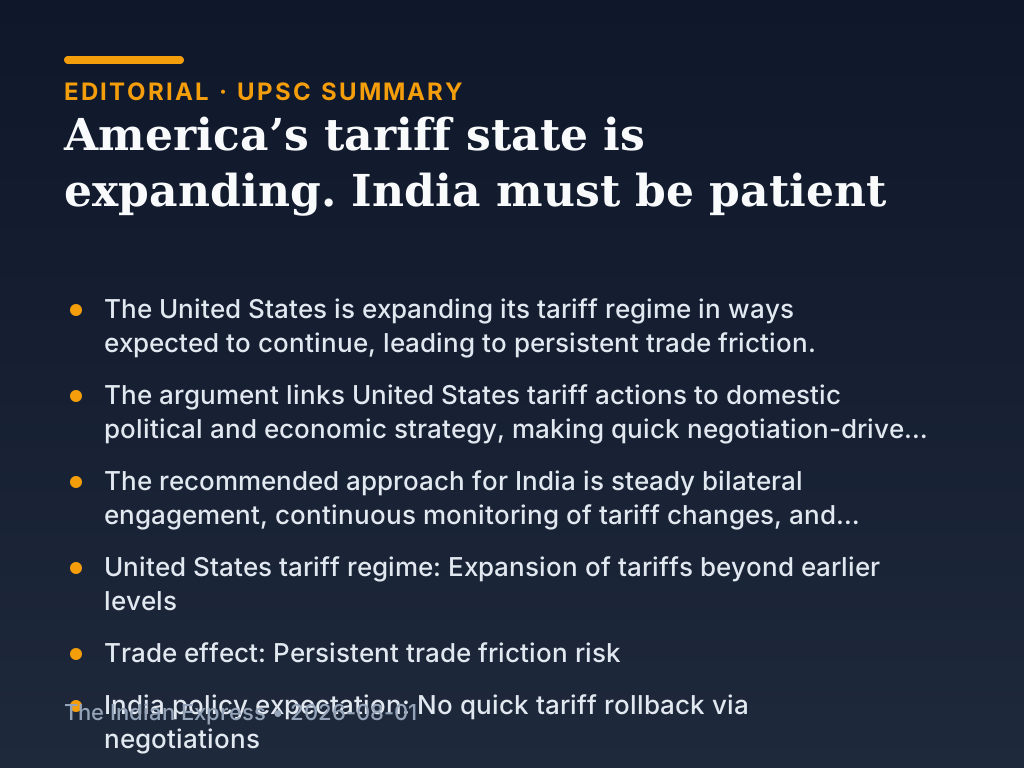
What happened: the United States tariff regime keeps expanding and trade friction is likely to persist
The discussion highlights a sustained expansion of the United States tariff regime and the expectation that tariff changes will keep unfolding rather than settle quickly. The likely practical effect is persistent trade friction for partner countries, because tariffs can be used as instruments of domestic political and economic strategy within the United States.
Background and earlier position: tariffs are treated as part of internal U.S. incentives, not a short-lived bargaining chip
The argument treats United States tariff actions as linked to broader domestic political and economic strategy. Under this framing, bilateral negotiations may not produce quick relief because United States tariff decisions can be influenced by internal incentives and political time horizons.
What changed now: India’s planning horizon should shift from short-term relief to long-run preparedness
The advice moves India away from expecting fast tariff easing and toward preparing for gradual outcomes from bilateral engagement. India is asked to manage trade relations continuously while monitoring tariff-policy changes as they unfold, rather than treating tariff costs as a temporary hurdle.
Related current affairs
- Trump’s tariff threat on generics: Why it matters for Indian pharma firms
- Forced labour farce: India should not let the U.S.’s new tariffs push it towards a trade deal
- Trump’s tariff threat on generics: What it could mean for Indian pharma firms
- Pharma push: Firms brace for tariff scenarios and cost impacts
- No new 10% tariff impact for 45% of exports: Centre
- In Brief: U.S. announces 10% tariffs on forced-labour imports; Centre says about 45% of India’s exports unaffected