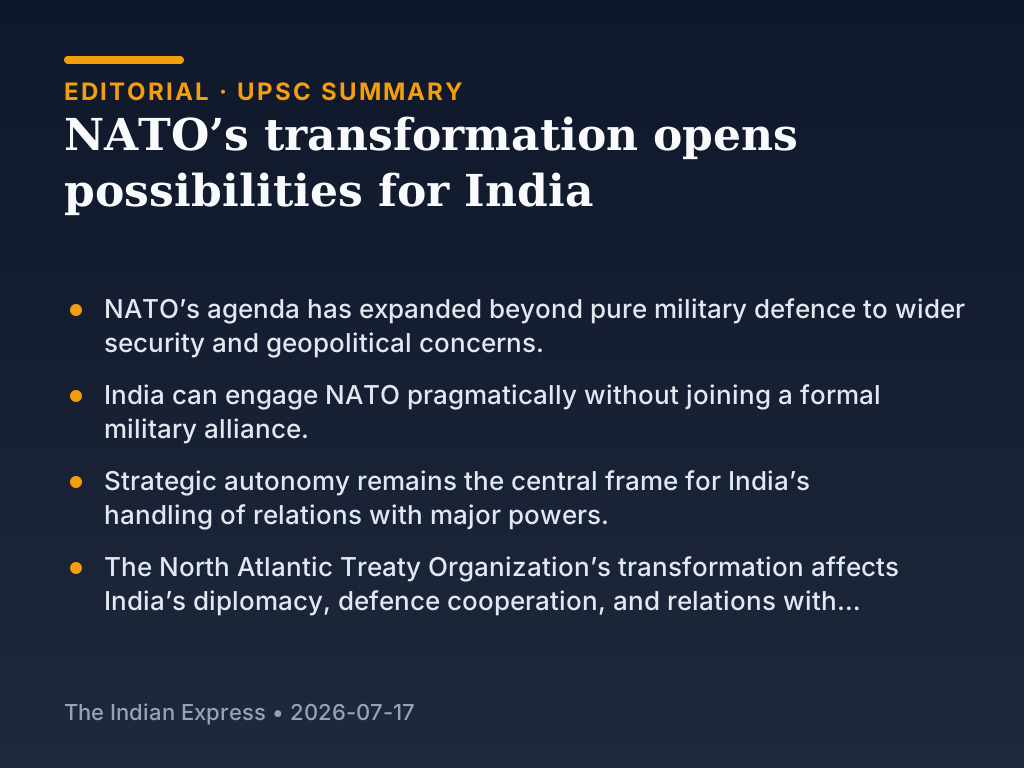
NATO’s expanding security agenda beyond pure military defence is creating more room for India to engage the alliance pragmatically. The North Atlantic Treaty Organization now figures in wider discussions on security, geopolitics, and the changing balance of power in Europe and the Indo-Pacific.
NATO’s wider security agenda gives India more flexibility because India can treat the alliance less as a purely military bloc and more as a platform linked to wider security debates.
Why the issue matters
NATO was created as a collective defence alliance, but its agenda has widened over time to include broader security and geopolitical concerns. That widening gives India more flexibility, because India can treat NATO less as a purely military bloc and more as a platform linked to wider security debates.
Related current affairs
- Sailor killed in drone strike laid to rest in Keralam
- It’s a recipe for nuclear proliferation
- Deterrence in West Asia (cartoon)
- Warning signals for India from NATO’s Ankara summit
- DAE promotes indigenous thorium-based three-stage nuclear power programme for long-term energy security
- Trade deals need to be set in strategy, not expediency