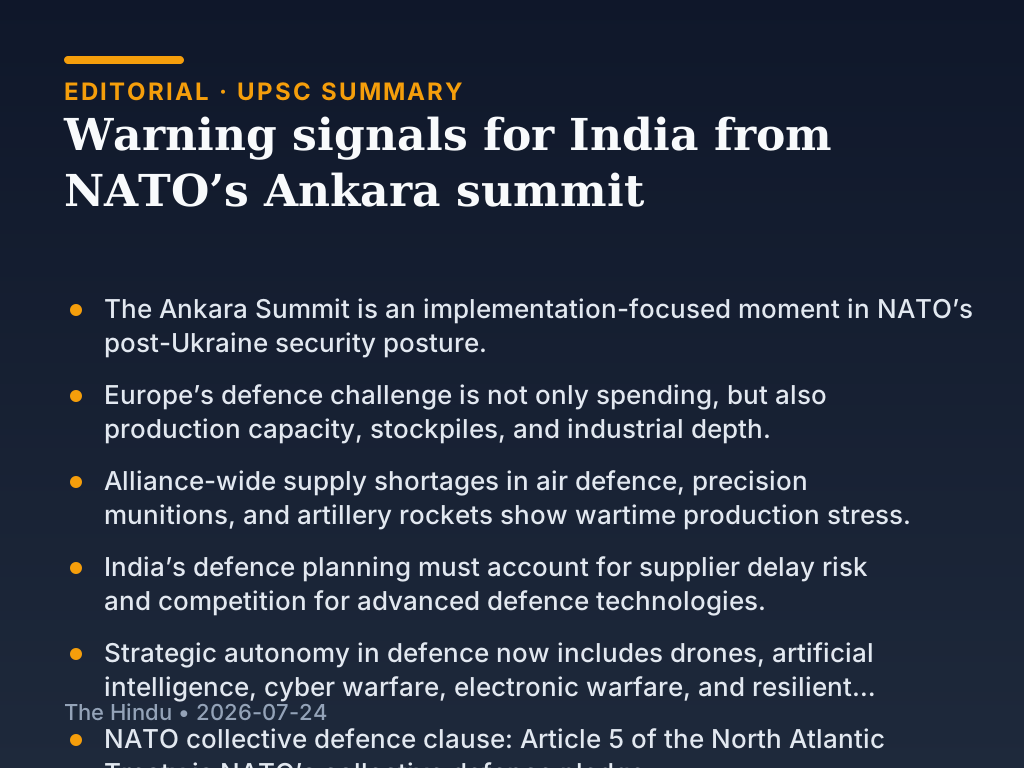
The NATO leaders’ summit in Ankara on July 7–8, 2026, is significant for India because it signals a deeper European push toward military rearmament and defence-industrial expansion. The shift matters because NATO is moving from political pledges to military capability, and India should read it as a warning about future procurement constraints and the need for indigenous capability.
What happened at the Ankara Summit
The summit brought together the 32 heads of state or government of NATO members. The leaders reviewed progress since the 2025 Hague Summit and set a roadmap for implementation.
First, NATO reaffirmed its Article 5 collective defence pledge. Second, the members endorsed a “Hague defence commitment” to raise defence spending to at least 5% of GDP by 2035, replacing the earlier 2% benchmark. Third, NATO reiterated support for Ukraine. Fourth, NATO members said they would build a high-technology, Europe-wide defence industrial base.
Background and earlier position
Related current affairs
- Towards a more European alliance
- NATO enters a new strategic era of transformation — NATO’s European shift offers India new strategic and defence opportunities
- BRIEFLY: Russian envoy summoned after missile lands on NATO ally; Algeria; Greece; India/other items
- US jets after missile landing in Poland? NATO scrambles jets after missile lands in Poland
- Russia-Ukraine war: Saudí unveils plan for maritime defense; Russian attacks kill 10; NATO scrambles jets after a missile lands in Poland
- U.S. begins review of force presence in Europe amid Trump ire on NATO