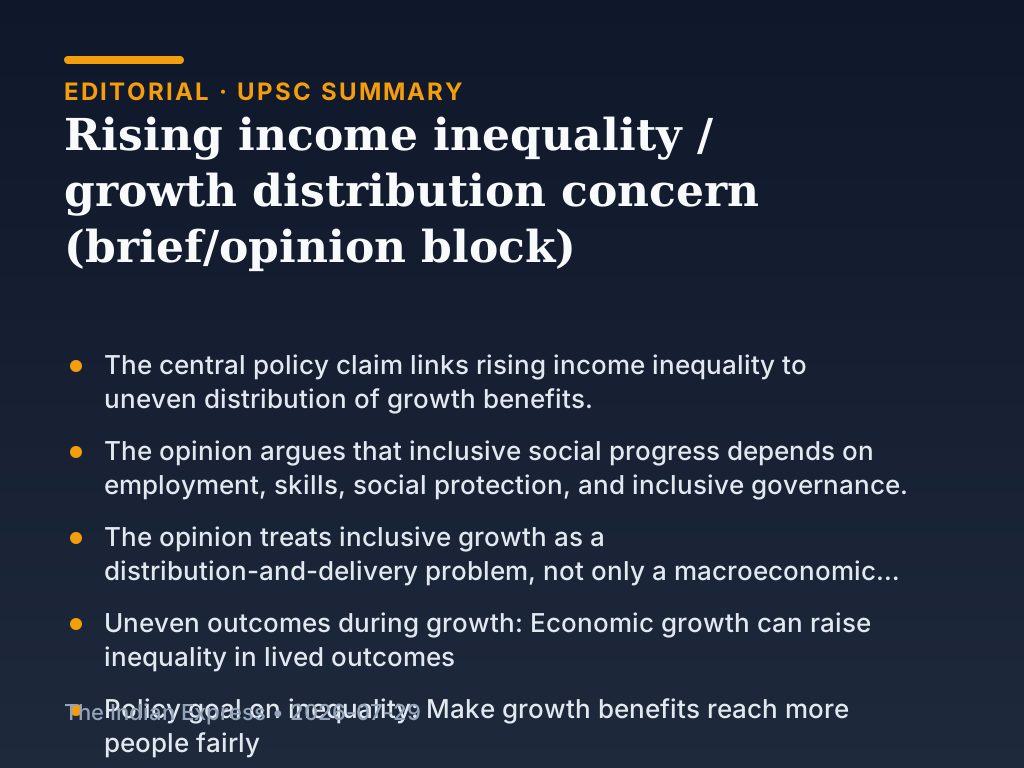
Rising income inequality / growth distribution concern (brief/opinion block)
Uneven distribution of growth outcomes makes inequality a policy constraint for employment, skills, social protection, and welfare delivery.
- Inclusive growth means economic gains come with jobs and access to basic services for all groups, not only for a few.
- Income inequality can stop social progress even when overall economic indicators look better, because groups share growth unequally.
- Welfare delivery means the government ensures eligible people actually receive benefits through fair targeting, service design, and monitoring.
- Employment and skills are linked because better jobs and employability raise earning opportunities, which can reduce inequality.
The policy argument on rising income inequality stresses that economic growth does not automatically improve living standards for all groups. Even when incomes rise at the macro level, employment opportunities, skills access, and social protection coverage can remain unequal, so social progress depends on how benefits of growth are distributed.
What happened (policy claim)
The opinion block builds a simple causal link: uneven distribution of growth outcomes increases inequality, and high inequality weakens the pace and quality of social progress. It treats inclusive growth as more than a growth-rate target. It is also an outcome of how governments design and deliver programmes that affect jobs, human capital, and income security.
Frame inequality as a channel through which growth can fail to reduce poverty and improve living standards. Then link solutions to state capacity: jobs, skills, social protection, and inclusive governance that improves access and delivery rather than only increasing aggregate GDP.
Related dispatches