What happened
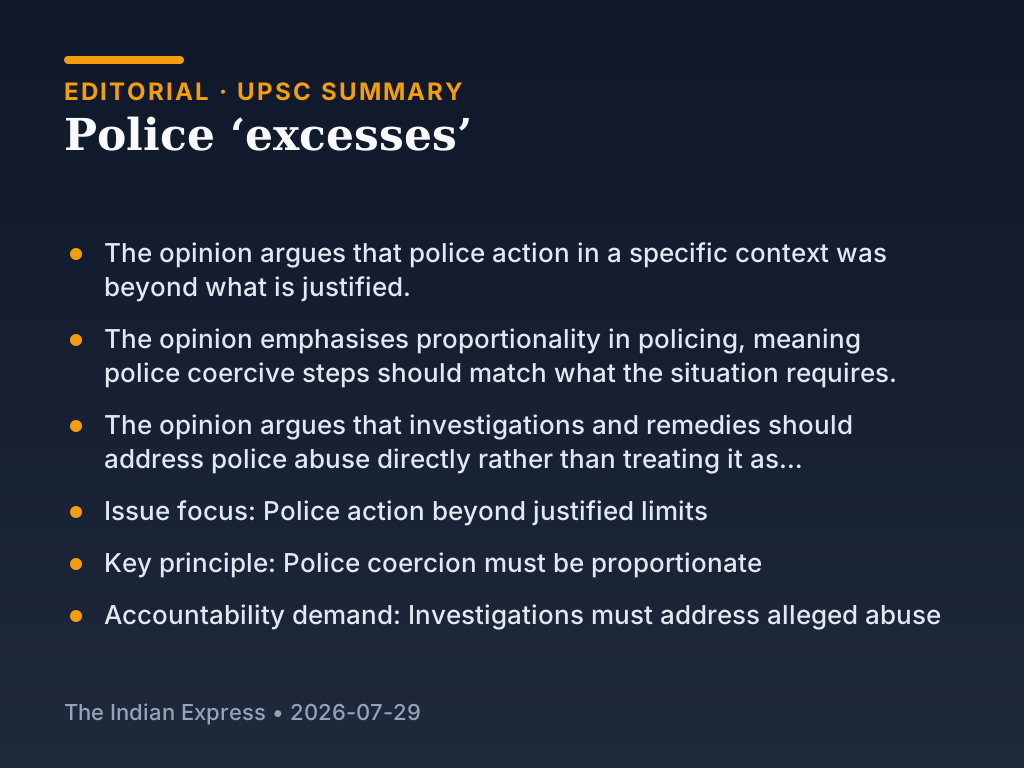
The opinion highlights a police accountability concern: police action in a specific context was argued to be beyond what is justified. The key governance expectation is proportionality in policing — police coercive steps should match what the situation requires. The opinion also stresses that investigations and remedies should be organised to address police abuse as a primary issue.
Background and earlier position
In policing governance, proportionality means police action should stay within what is necessary to achieve lawful public order objectives. Accountability means police institutions should investigate alleged misconduct, identify responsibility where wrongdoing is found, and ensure consequences and remedies for affected persons. A recurring weakness in accountability systems is when investigations minimise the abuse element and do not connect findings to real corrective action.
What changed now
The opinion calls for a shift in how police abuse is handled after an incident. It argues for investigations and remedies that directly identify and address police abuse rather than treating disproportionate harm as incidental to the broader event. It also argues that accountability should not rely on approaches that effectively downplay excessive or unjustified police action.
Related current affairs
- Force of law: Delhi Police are pursuing protesters, but not acting against their own
- Bihar turning police into a ‘weapon’ to evade accountability, says Rahul
- T.N. SC youth’s death: 6 police officers named as accused
- Courts must speak language of rule of law, economics: CJI
- After Cong. stir, FIR over pellet gun use registered
- NHRC takes suo motu cognizance of reported assault on two men from Manipur in Delhi’s Munirka