What happened
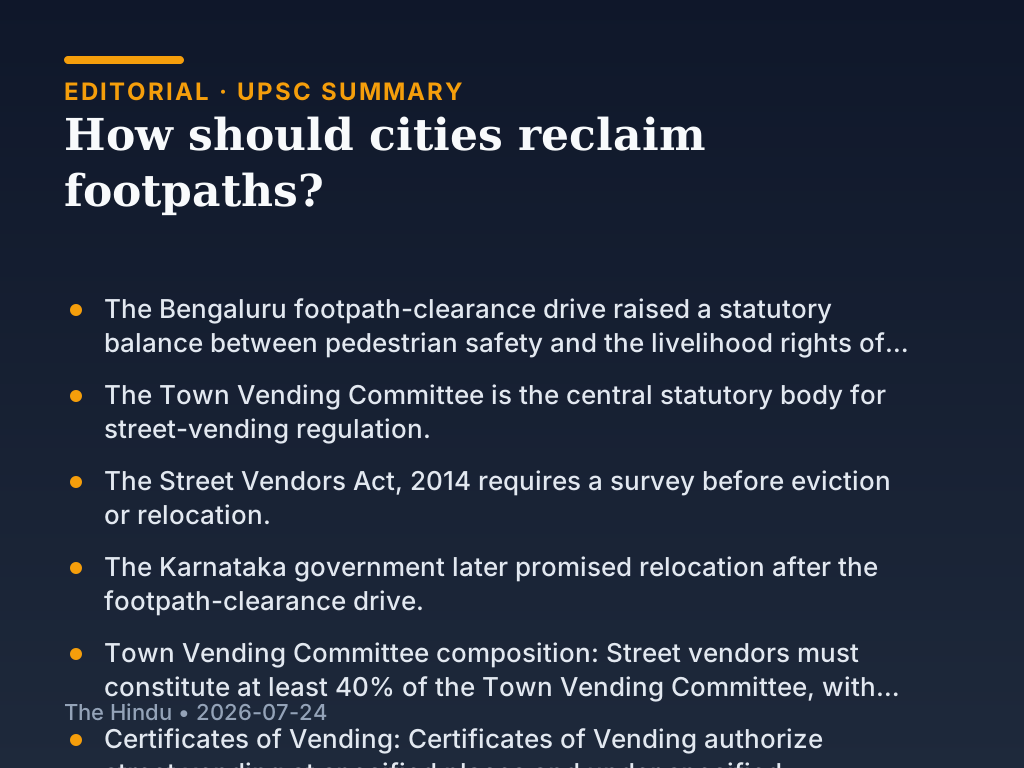
Bengaluru’s civic bodies carried out a short Safe Footpath drive after the Supreme Court recognized the right to walk on safe, obstruction-free footpaths as a fundamental right. The drive removed many street vendors and cleared encroachments, and the legal question is whether those removals respected the Street Vendors (Protection of Livelihood and Regulation of Street Vending) Act, 2014.
Background and earlier position
The Street Vendors Act, 2014 was enacted to regulate street vending, not abolish it. Street vending is treated as a legitimate occupation protected under Article 19, while regulation in public interest is also permitted. The law therefore seeks to balance two interests: pedestrians’ right to obstruction-free footpaths and vendors’ right to livelihood.
Statutory process under the Act
The Town Vending Committee is the key decision-making body. The committee includes officials, police, planning authorities, residents, and street vendors, with vendors required to form at least 40% of the membership and to include women and marginalized communities.
Related current affairs
- (Photo caption) People gather as authorities carry out an anti-encroachment drive at a mosque in Jaipur on June 8
- Supreme Court verdicts say the state must preserve life during an indefinite hunger strike
- SC asks civic bodies to act on unauthorised buildings
- Supreme Court statement says allegations against sitting judge must follow institutional mechanism
- Treat waterlogging as disaster, work on war footing: L-G to officials
- SC notice to Jharkhand on plea on exam irregularities