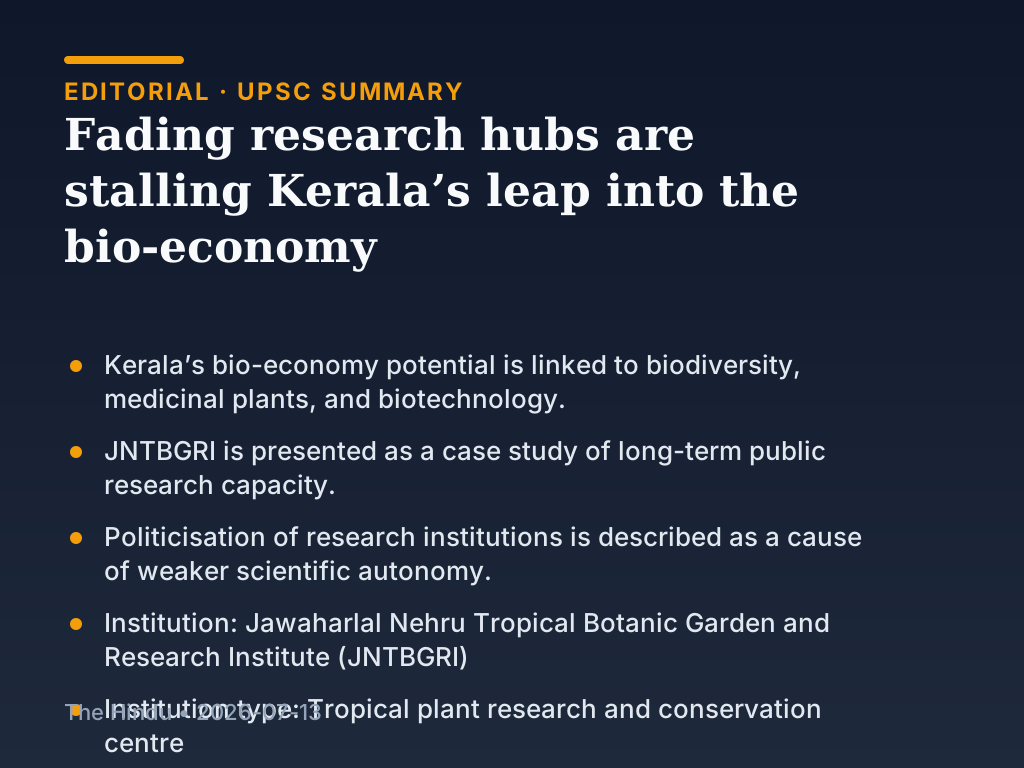
Kerala’s bio-economy ambitions are being constrained by weaker support for basic science. The Hindu uses the Jawaharlal Nehru Tropical Botanic Garden and Research Institute (JNTBGRI) as the main example of a research centre that built deep scientific capacity but now faces staff decline and reduced institutional strength.
What The Hindu says
Kerala has literacy, scientific temper, and environmental awareness, but public policy has increasingly favoured visible, short-term outcomes over long-term investment in fundamental science.
The Hindu says JNTBGRI began in the 1970s and grew into a major tropical plant research and conservation centre. It maintained tens of thousands of plant accessions across thousands of species, documented biodiversity, conserved endangered plants, and contributed to medicinal plant research and sustainable use.
Current problems highlighted
Related current affairs
- Reclaiming Assam’s elephant habitat, one weed at a time
- NBA disburses ~Rs. 3.79 crore under Access and Benefit Sharing to 33 States/UTs and research entities
- Meghalaya launches mission to protect clouded leopards
- The Ecologically Sensitive Area debate highlights the need for balanced, inclusive conservation approaches (by Madhusudan Bandi)
- Western Ghats conservation with science and dialogue
- Establishment of Bio-AI Hubs and Biofoundries/biomanufacturing hubs under BioE3 through calls for proposals