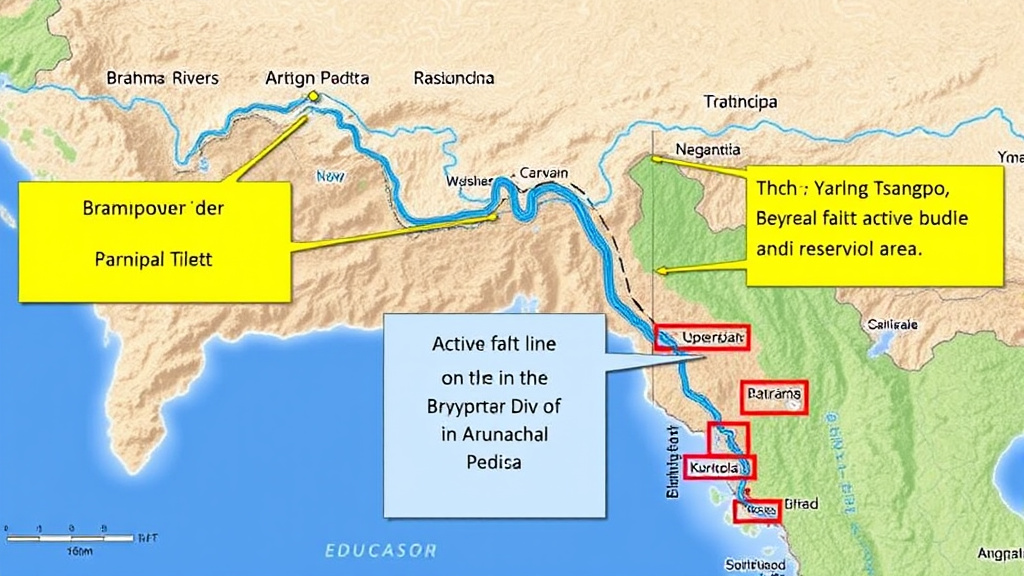
Chinese geologists have reported an active fault line beneath the reservoir area of the Yarlung Tsangpo hydropower station in Tibet. The reported fault, the Paizhen Fault, has raised questions about the structural safety of what is described as the world’s largest hydropower project on the Brahmaputra River system.
The project is located close to the border with Arunachal Pradesh. The finding is relevant for India because the Brahmaputra is a major transboundary river and because large dams in seismic zones involve risks related to engineering design, reservoir stability, and disaster preparedness.
What the study has flagged
The reported geological concern is the presence of an active fault line in the reservoir area. An active fault increases the possibility of seismic movement affecting a large dam or associated infrastructure, especially in a high-mountain setting.
Why the issue matters
The issue links physical geography, disaster management, and infrastructure safety. For UPSC, the key questions are how far geological risk should shape hydropower planning, what safeguards are needed for large dams in earthquake-prone regions, and how India should assess developments on transboundary rivers near its border.
Related current affairs
- Team Arunachal: 10 Years, One Vision (Vikas | Sewa | Virasat) — Promotional feature on infrastructure and hydropower decade plans
- Five killed amid heavy rainfall in Arunachal; several reported missing
- Arunachal students’ body to assess claims of Chinese incursion
- Border with India ‘generally stable at the moment’: China
- China calls Arunachal Pradesh as Zangnan; move by India 'illegal, null and void'
- China calls Arunachal Pradesh move ‘illegal, null and void’