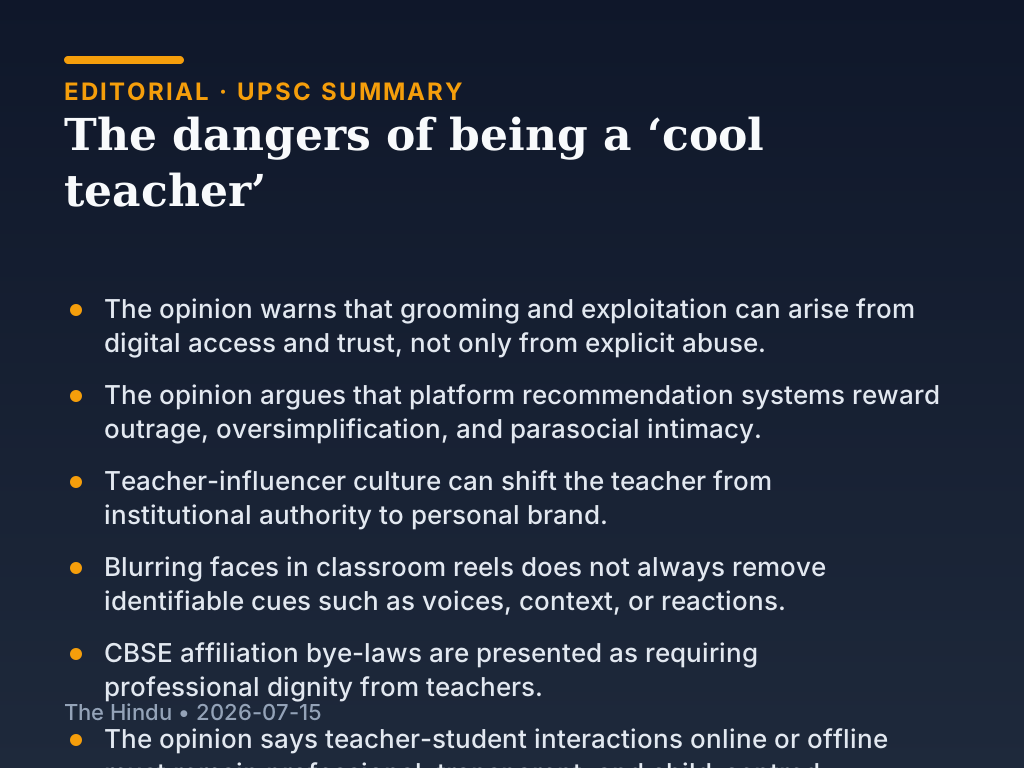
The Hindu opinion argues that teachers who become social-media creators can blur the line between professional authority and personal intimacy. The central concern is not friendly teaching alone, but informal digital conduct such as private messaging, late-night live sessions, and social-media following that can create risk for children and weaken institutional boundaries.
The opinion links the concern to India’s child-protection and privacy framework. It refers to the Protection of Children from Sexual Offences Act, 2012, broader duty-of-care principles for adults responsible for children, the Digital Personal Data Protection Act, 2023, Central Board of Secondary Education affiliation expectations, and digital-communication guidelines issued by Tamil Nadu education authorities.
Related current affairs
- Implementation of AgriStack and Digital Agriculture Mission
- Ministry of Minority Affairs to leverage AI and digital technologies under IndiaAI Mission for scheme implementation and citizen-centric delivery
- Government strengthens online safety framework for children by tightening action against CSAM on social media
- Government strengthens safeguards against digital addiction: legal framework, child online safety and cyber awareness
- APAAAR: SC to direct CBSE to comply with HC order
- Government and RBI strengthen fintech ecosystem via enhanced regulatory frameworks and consumer protection measures